
4D Ultrasound in Pokhara — 5D & 4D Ultrasound with AI
4D ultrasound in Pokhara at KDRC is a pregnancy scan that shows a live, three-dimensional image of your baby’s face and movements, and 5D is the same scan with AI-assisted, more lifelike rendering. It uses sound waves, not radiation, is best done at around 24–32 weeks, and is added alongside a medically indicated pregnancy scan.
Also called: 4D/5D USG, 4d ultrasound, 3d ultrasound, 5d ultrasound, 4d scan, 5d scan
 4D/5D USGKDRC · Pokhara
- Duration
- The 3D/4D/5D part of the scan is usually kept to a short
- Reported by
- Consultant radiologists
- Location
- Amarsingh Chowk, Pokhara-10
- Book / price
- 061553538 · 9856077433
- 4D ultrasound shows a moving 3D image of your baby; “5D” is 4D with AI-assisted realistic rendering, not a fifth dimension.
- The clearest face pictures are usually obtained at about 24–32 weeks of pregnancy.
- 4D/5D shows the baby’s surface and movements; it does not replace the 18–22 week anomaly scan.
- Ultrasound uses no ionising radiation; KDRC follows ALARA and adds 4D/5D views alongside a medically indicated scan.
- KDRC does not determine or disclose fetal sex, in line with Nepal’s Muluki Criminal Code 2074.
- Call 061-553538 or 9856077433 to book 4D ultrasound with AI in Pokhara.
On this page (14 sections)
- What is 4D and 5D ultrasound?
- 2D vs 3D vs 4D vs 5D ultrasound: what is the difference?
- 4D ultrasound with AI: what does the AI actually do?
- When is the best time for a 4D or 5D scan?
- What can a 4D or 5D ultrasound show — and what can’t it?
- 4D/5D ultrasound vs anomaly scan vs fetal ultrasound
- Is 4D and 5D ultrasound safe for my baby?
- Who may benefit from 3D/4D views?
- How to prepare for a 4D or 5D ultrasound
- What happens during a 4D/5D scan at KDRC?
- Can 4D or 5D ultrasound show the baby’s sex?
- What if the baby will not show the face?
- How much does a 4D or 5D ultrasound cost in Pokhara?
- Why choose KDRC for 4D ultrasound in Pokhara?
What is 4D and 5D ultrasound?
4D ultrasound is a pregnancy scan that shows a three-dimensional image of your baby moving in real time, and 5D ultrasound is a newer name for the same live 3D scan with more lifelike, AI-assisted rendering. If you are looking for 4D ultrasound in Pokhara, Kaligandaki Diagnostic and Research Center (KDRC) at Shantipath, Amarsingh Chowk, offers AI-assisted 4D and 5D ultrasound on a high-definition ultrasound system with 3D, 4D and volume scanning, with scans reported by consultant radiologists.
A standard pregnancy scan is two-dimensional (2D): it shows thin black-and-white slices through the baby. A 3D scan collects many of these slices in a block of data, called a volume, and the computer turns that volume into a still, surface-shaded picture. 4D adds the fourth dimension — time — so the 3D picture updates many times a second and you watch your baby yawn, stretch, suck a thumb or open and close the hands. “5D” is not a fifth physical dimension. It is a marketing term for 4D imaging with advanced, more realistic rendering (for example, simulated lighting and skin tones) and automated tools built into the ultrasound software.
At KDRC, we describe our service honestly as 4D ultrasound with AI assistance: live 3D imaging, enhanced by AI-assisted image rendering and automated measurements on the ultrasound system. It is a wonderful way to see your baby’s face, but it is an add-on to good medical scanning, not a replacement for it. The detailed check of your baby’s organs is done on the anomaly scan at 18–22 weeks, and routine pregnancy scans are covered on our fetal ultrasound page.
2D vs 3D vs 4D vs 5D ultrasound: what is the difference?
The difference between 2D, 3D, 4D and 5D ultrasound is how the same sound-wave information is displayed: as flat slices, a still 3D picture, a moving 3D picture, or a moving 3D picture with enhanced realistic rendering. All four use the same safe, non-ionising sound waves, and all four start from the same 2D data collected by the probe.
| Type | What you see | Main use |
|---|---|---|
| 2D | Live black-and-white slices | Medical checks and measurements |
| 3D | Still 3D surface picture | Extra views of face, lip, hands and feet |
| 4D | 3D picture moving in real time | Expressions and movements |
| 5D (AI-assisted 4D) | Live 3D with lifelike lighting and automated tools | Clearer, more natural face images; faster workflow |
The table below sets out what each type shows, what it is mainly used for, and how it fits into pregnancy care at KDRC.
| Type | What you see | Main medical role | When it is used at KDRC |
|---|---|---|---|
| 2D ultrasound | Black-and-white cross-sections, live | The diagnostic workhorse: measurements, organ checks, heart, placenta, fluid | Every pregnancy scan, from dating to growth scans |
| 3D ultrasound | Still, surface-shaded image built from a volume | Extra views of the face, lip, spine, hands and feet; helps explain findings | Added to a medically indicated scan when useful |
| 4D ultrasound | 3D image moving in real time | Watching movements and expressions; helps parents understand the baby’s appearance | Alongside a fetal ultrasound or anomaly scan |
| 5D (AI-assisted 4D) | Live 3D with lifelike lighting and automated tools | Same as 4D; clearer, more natural-looking surface images and quicker workflow | Alongside a medically indicated scan, for a short period |
In short: 2D answers medical questions; 3D, 4D and 5D mainly help you see what your baby looks like. Radiologists sometimes use 3D views to look more closely at the face or limbs, and RadiologyInfo notes that some physicians use 3D ultrasound to help check whether the baby is developing normally — but the essential checks are always made on 2D images.
4D ultrasound with AI: what does the AI actually do?
AI in 4D ultrasound is software built into the ultrasound system that helps render clearer 3D and 4D images and automates some routine steps, such as measurements; it does not diagnose your baby on its own. Every image and every report is still reviewed by a trained doctor.
The AI features on modern ultrasound systems generally fall into a few groups:
- AI-assisted image rendering and enhancement: the software smooths out speckle, separates the baby’s skin surface from the surrounding fluid and placenta, and applies realistic lighting, so the face looks more natural. This is what most clinics market as “5D”.
- Automatic clean-up of obstructions: tools help trim away parts of the volume — such as the umbilical cord, a hand or the uterine wall — that sit in front of the face.
- Automated measurements: the system can suggest standard measurement planes and place callipers for head, abdomen and thigh-bone measurements, which the sonologist then checks and corrects if needed.
- Faster workflow: by reducing manual adjustment, the operator can obtain a good image more quickly, which supports keeping scan time short.
What AI does not do is replace clinical judgement. The software can make an image look beautiful without making it more accurate for diagnosis. That is why KDRC’s consultant radiologists, Dr. Bishworaj Bastakoti and Dr. Nawaraj Paudel, report our scans, and why any concern is assessed on standard 2D images and, where needed, a dedicated anomaly scan or colour Doppler study.
When is the best time for a 4D or 5D scan?
The best time for a 4D or 5D baby face scan is usually between about 24 and 32 weeks of pregnancy, with many sonologists preferring roughly 26–30 weeks. In this window the baby has some fat under the skin, so the face looks fuller, and there is usually still enough amniotic fluid in front of the face to get a clear picture.
The table below shows what you can usually expect from 3D/4D imaging at different stages of pregnancy.
| Weeks of pregnancy | What 3D/4D typically shows | Comment |
|---|---|---|
| Before 18 weeks | Whole-body shape and movements; face looks thin and bony | Not ideal for face pictures; routine dating and NT scans come first |
| 18–22 weeks | Face, lips, hands and feet visible but slim | The anomaly scan is the priority; short 3D/4D views can be added in the same visit |
| 24–32 weeks | Fuller cheeks, clear expressions, yawning and stretching | Usually the best window for face imaging |
| After 32 weeks | Close-up face views if position allows | Less fluid and a bigger baby; the face is more often hidden against the placenta or uterine wall |
Your exact dates matter, so bring your dating scan report. If you have not had an early scan, start with a routine fetal ultrasound to confirm how many weeks pregnant you are. Our article on the pregnancy ultrasound schedule in Nepal explains which scan is done when, and 4D ultrasound in pregnancy: best week and what you will see goes into more detail on timing.
What can a 4D or 5D ultrasound show — and what can’t it?
A 4D or 5D ultrasound can show your baby’s face, expressions and movements in lifelike detail, but it cannot check the internal organs, confirm that the baby is healthy, or replace the anomaly scan. Its strength is the surface of the baby; the inside of the body is examined with 2D ultrasound.
| 4D/5D can usually show | 4D/5D cannot reliably show or do |
|---|---|
| The baby’s face, profile, nose, lips, eyes and ears | The structure of the heart, brain and other internal organs in diagnostic detail |
| Expressions: yawning, frowning, smiling-like movements, sucking | Genetic or chromosomal conditions such as Down’s syndrome |
| Hands, fingers, feet and toes, and how the baby moves them | Every possible physical difference — small problems can be missed |
| Surface views that can help explain a finding such as a cleft lip | A guaranteed clear face picture on every visit |
| A short video clip and still images to take home | The baby’s sex — KDRC does not determine or disclose fetal sex |
A good 4D picture depends on things no machine controls: the baby’s position, whether the hands or cord are in front of the face, how much fluid there is, where the placenta lies and the mother’s body build. AI rendering helps, but it cannot create a view where the face is not visible. If the baby is facing your back or pressed against the uterine wall, the sonologist may ask you to walk, change position or empty your bladder and try again.
4D/5D ultrasound vs anomaly scan vs fetal ultrasound
A 4D/5D ultrasound shows what the baby looks like, the anomaly scan checks whether the baby’s organs are developing normally, and fetal ultrasound is the umbrella term for all the pregnancy scans your doctor schedules. They answer different questions, so one does not replace the other.
| Scan | Main question it answers | Usual timing |
|---|---|---|
| Fetal ultrasound (dating, NT, growth, well-being) | Is the pregnancy progressing normally? Due date, number of babies, growth, fluid, placenta | Throughout pregnancy, as your doctor advises |
| Anomaly scan (Level II / TIFFA) | Are the baby’s brain, face, spine, heart, abdomen, kidneys and limbs formed normally? | 18–22 weeks |
| 4D/5D ultrasound with AI | What does my baby look like, and how does the baby move? | Usually 24–32 weeks, or added briefly to another scan |
| Colour Doppler | Is blood flowing well through the cord, placenta and baby’s vessels? | When your obstetrician requests it |
The NHS describes the 20-week scan as the main mid-pregnancy check of the baby’s physical development, usually done between 18 and 21 weeks. At KDRC, anomaly scans are available any day of the week, and 3D/4D views can be captured in the same session when the baby’s position allows. If you only want one mid-pregnancy scan, choose the anomaly scan; a separate 4D/5D session later is optional. Read what an anomaly scan checks for more detail.
- detailed 18–22 week organ check
- blood flow in cord and placenta
- all ultrasound services
- dating, NT, growth and well-being scans
- early pregnancy and gynaecology
Is 4D and 5D ultrasound safe for my baby?
4D and 5D ultrasound use the same sound waves as ordinary pregnancy scans, involve no ionising radiation, and are considered safe when used for a medical reason by trained staff for no longer than necessary. The NHS states that there are no known risks to the baby or the mother from having an ultrasound scan.
Ultrasound is still a form of energy, so experts advise using it prudently. The US Food and Drug Administration (FDA) notes that ultrasound can heat tissues slightly and recommends the ALARA principle — exposure “as low as reasonably achievable” while keeping diagnostic quality. The FDA also says that scanning solely for non-medical purposes, such as “keepsake” videos, is discouraged, while keepsake images are reasonable if they are produced during a medically indicated examination without additional exposure. The American Institute of Ultrasound in Medicine (AIUM) likewise discourages non-medical use of ultrasound and recommends that fetal imaging be done by trained professionals. The American College of Obstetricians and Gynecologists (ACOG) advises that ultrasound in pregnancy be used when there is a medical reason and with the lowest exposure settings needed.
Regulators such as the FDA and AIUM discourage ultrasound done only for keepsake pictures. At KDRC, 4D/5D views are taken alongside a medically indicated pregnancy scan, or briefly by a trained sonologist, keeping exposure as low as reasonably achievable. If you notice reduced baby movements, bleeding, leaking fluid or severe pain, contact your doctor or hospital urgently — do not wait for a 4D appointment.
How KDRC follows ALARA for 4D/5D imaging:
- 3D/4D/5D views are added alongside a medically indicated scan — such as a growth or well-being scan your obstetrician has requested — or performed briefly by a trained sonologist.
- The face sequence is kept short and focused; we do not run long entertainment sessions.
- All scans are performed by trained staff and reported by consultant radiologists.
- If the baby’s position does not allow a good face view, we do not prolong scanning to force one.
For a wider look at ultrasound safety, read our guide Is ultrasound safe? Radiation facts every patient should know.
Who may benefit from 3D/4D views?
3D and 4D views are most useful when they add information or understanding to a medically indicated pregnancy scan, and they are also valued by many parents as a way to connect with their baby. Common situations include:
- Explaining a facial finding: when a cleft lip is suspected on 2D imaging, a 3D surface view can help parents and doctors understand its extent before referral.
- Looking at hands, feet and limbs when the 2D view raises a question, as part of a medically requested scan.
- Parents who find 2D images hard to interpret: a 3D/4D picture of the face is easier to recognise than grey cross-sections.
- Family bonding: many parents, grandparents and partners find the moving image meaningful. The AIUM notes that evidence for an effect on parental bonding is limited, so we treat this as a welcome extra rather than a medical benefit.
Whatever the reason, 4D/5D is never a substitute for your scheduled scans. If you are worried about your baby — for example, reduced movements — you need a medical assessment, not a 4D session.
How to prepare for a 4D or 5D ultrasound
A 4D or 5D ultrasound needs no fasting and very little preparation; the most helpful steps are booking in the right week, drinking water in the days before, and bringing your earlier scan reports.
- Book for about 24–32 weeks — call 061-553538 or 9856077433
- Bring your antenatal card and earlier scan reports
- Bring your doctor’s request slip if a growth or well-being scan is due
- Drink plenty of water in the days before the scan
- No fasting needed; a light snack may help the baby move
- Wear loose two-piece clothing
- Skip creams or oils on your tummy that day
Good hydration in the days before the scan helps keep the amniotic fluid healthy, which gives clearer pictures. A light snack before the appointment may encourage the baby to move. You usually do not need a full bladder at this stage of pregnancy; our team will tell you if your scan type needs one. Wear loose, two-piece clothing so you only need to uncover your tummy, and avoid applying creams or oils to your abdomen on the day, as they can affect the gel contact.
Bring your antenatal card, your dating or NT scan report and your anomaly scan report if you have had one. If your scan has been requested by your obstetrician, bring the request slip, because 4D/5D views are best taken alongside a medically indicated examination.
What happens during a 4D/5D scan at KDRC?
During a 4D/5D scan at KDRC you lie comfortably on a couch, warm gel is applied to your tummy, and the sonologist first checks the baby with standard 2D ultrasound before switching to 3D/4D mode for the face and movements.
- 1Book the right weekCall to book, ideally between 24 and 32 weeks, alongside any scan your doctor has requested.
- 2RegisterBring your antenatal card and earlier scan reports to reception at Shantipath, Amarsingh Chowk.
- 32D check firstThe sonologist checks the baby’s position, heartbeat, fluid and placenta with standard 2D ultrasound.
- 4Switch to 3D/4DA 3D box is set around the face and the scan switches to live 4D with AI-assisted rendering.
- 5Short, focused imagingIf the face is hidden, you may walk or change position; scanning is kept short in line with ALARA.
- 6Images and reportSelected images are provided and our team tells you when to collect the written report.
The 2D part comes first because it confirms the baby’s position, heartbeat, fluid and placenta, and answers any medical question your doctor has asked. Then the sonologist finds the face, sets a 3D “box” around it and switches to live 4D. AI-assisted rendering and lighting tools are adjusted to make the picture as clear and natural as possible. If a hand, the cord or the placenta is in the way, you may be asked to walk for a few minutes, change position or have a sip of juice, and the sonologist will try again — within a short, sensible scanning time.
Your partner or a family member is welcome to sit with you. At the end, the main findings of the medical part of the scan are explained, and selected images are provided. Our team will tell you when to collect your written report so that you can share it with your obstetrician. If you have questions about the terms in your report, our article on how to read an ultrasound report can help.
Can 4D or 5D ultrasound show the baby’s sex?
KDRC does not determine or disclose the baby’s sex on any scan, including 4D and 5D ultrasound. Under Section 188 of Nepal’s Muluki Criminal Code (National Penal Code) 2074, identifying fetal sex with the intention of abortion and sex-selective abortion are criminal offences, and we follow both the law and ethical practice. Please do not ask our staff to reveal the sex; the 4D/5D session is focused on the face, expressions and movements.
What if the baby will not show the face?
If the baby is lying face-down, has hands or the cord across the face, or is pressed against the placenta, a clear 4D/5D face picture may not be possible on that day. This is common and is not a sign of a problem. The sonologist will usually try simple measures first: walking, changing your position, emptying your bladder or a short break. If a good view still cannot be obtained, our team will explain your options, which may include a short repeat attempt at a later visit if it is combined with a scan your doctor has requested. We will not prolong scanning beyond a sensible time to force a picture, in keeping with the ALARA principle.
Other factors that can limit 4D/5D image quality include low amniotic fluid, an anterior placenta (lying at the front of the womb), late pregnancy, twins and a thicker abdominal wall. None of these make the scan unsafe; they simply make the surface view harder to capture. The medical 2D examination is not affected in the same way.
How much does a 4D or 5D ultrasound cost in Pokhara?
The cost of a 4D or 5D ultrasound in Pokhara depends on what the visit includes, so KDRC quotes the price individually rather than listing a fixed rate. Factors that affect the price include whether 3D/4D/5D views are added to another scan (for example, a growth scan or anomaly scan) or booked as part of a separate visit, whether you are carrying twins, and whether your doctor has requested additional studies such as colour Doppler. Prices are reviewed from time to time. For the current price of 4D ultrasound with AI in Pokhara, call 061-553538 or 9856077433 (Viber); our staff can also suggest the best week to book.
Why choose KDRC for 4D ultrasound in Pokhara?
Families choose KDRC for 4D ultrasound in Pokhara because it combines HD 3D/4D ultrasound with AI-assisted rendering, consultant radiologist reporting and a medically responsible approach to keepsake imaging.
- HD ultrasound with 3D, 4D and volume scanning, with AI-assisted image enhancement and automated measurements on the ultrasound system.
- Medical first: 4D/5D views are taken alongside a proper pregnancy scan, so you get a meaningful check of your baby’s well-being as well as pictures.
- Consultant radiologists: Dr. Bishworaj Bastakoti and Dr. Nawaraj Paudel report scans at KDRC. See our doctors page.
- One centre for the whole pregnancy: fetal ultrasound from dating to growth scans, the anomaly scan (available any day of the week), colour Doppler, 3D TVS ultrasound for early pregnancy and gynaecology, and mobile ultrasound for women who cannot travel.
- Same-day reports for most ultrasound; our team will tell you when to collect yours.
- Ethical practice: we follow Nepal’s law and do not disclose fetal sex.
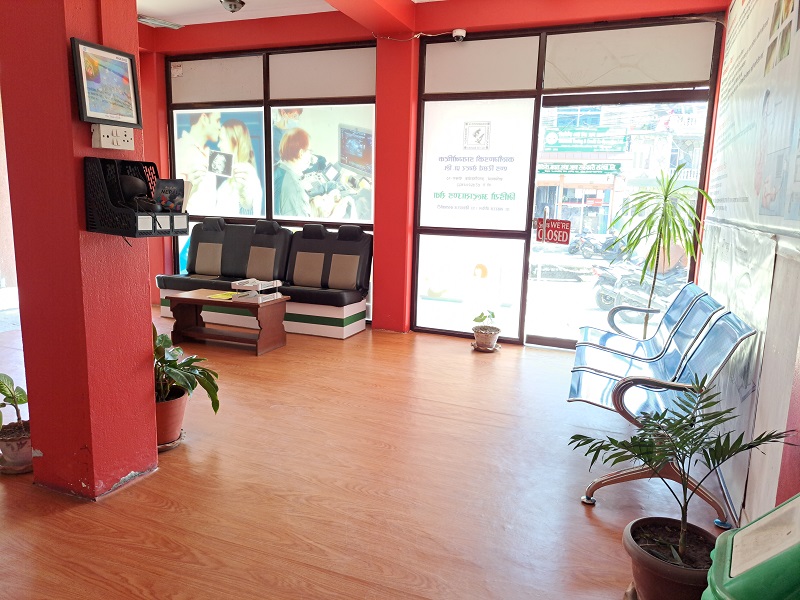
KDRC is located at Shantipath, Amarsingh Chowk, Pokhara-10, Kaski. If you searched “4D scan near me” or “5D ultrasound in Pokhara” from Lakeside, Bagar, Lekhnath or anywhere in Kaski, call 061-553538 or 9856077433, or book your 4D/5D ultrasound online. Visit our contact page for directions, see the full range of ultrasound services in Pokhara, or read about the types of ultrasound scan.
How to prepare
- Book for about 24–32 weeks of pregnancy; call 061-553538 or 9856077433.
- Drink plenty of water in the days before the scan.
- No fasting needed — a light snack may help the baby move.
- A full bladder is usually not required; our team will tell you if it is.
- Bring your antenatal card, earlier scan reports and any doctor’s request slip.
- Wear loose two-piece clothing and avoid creams or oils on your tummy.
- Tell us if you are expecting twins.
How long it takes
The 3D/4D/5D part of the scan is usually kept to a short, focused period of a few minutes, and the whole visit including the medical 2D scan typically takes around 20–40 minutes depending on the baby’s position.
Price in Pokhara
The cost of 4D/5D ultrasound in Pokhara depends on whether it is added to another pregnancy scan, twin pregnancy and any additional studies your doctor requests. Call 061-553538 or 9856077433 for the current price.
What to expect at KDRC
Arrive at KDRC on Shantipath, Amarsingh Chowk, with your antenatal card and earlier scan reports, and register at reception. No fasting is needed, and a light snack beforehand may help your baby move. When it is your turn, you lie on a couch in a dimmed room and lower your clothing to uncover your tummy; your partner or a family member can sit with you. Warm gel is spread on your abdomen and the sonologist first scans with standard 2D ultrasound to check the baby’s position, heartbeat, amniotic fluid and placenta, and to complete any examination your doctor has requested. Next, the sonologist locates the face, sets a 3D box around it and switches to live 4D, using AI-assisted rendering and lighting to make the picture as clear and natural as possible. If a hand or the cord covers the face, you may be asked to walk, turn on your side or empty your bladder before trying again, always within a short scanning time. At the end, the medical findings are explained and selected images are provided. The baby’s sex is not disclosed. Our team tells you when to collect your written report so you can share it with your obstetrician.
Frequently asked questions
Where can I get a 4D ultrasound in Pokhara?
You can have a 4D ultrasound at Kaligandaki Diagnostic and Research Center (KDRC), Shantipath, Amarsingh Chowk, Pokhara-10. We use an HD ultrasound system with 3D, 4D and volume scanning and AI-assisted rendering, and scans are reported by consultant radiologists. Call 061-553538 or 9856077433 to book, or use our online appointment form.
What is the difference between 3D, 4D and 5D ultrasound?
3D ultrasound produces a still three-dimensional picture of your baby. 4D is the same 3D image moving in real time, so you can watch expressions and movements. 5D is a marketing name for 4D with AI-assisted, more lifelike rendering and automated tools. All three use the same safe sound waves and start from standard 2D ultrasound data.
Is 5D ultrasound really a fifth dimension?
No. There is no fifth physical dimension in ultrasound. “5D” describes 4D imaging with advanced rendering, such as realistic lighting and skin tones, plus automated features on the ultrasound software. The images can look more natural, but the scan does not see anything a good 4D scan cannot. At KDRC we describe it honestly as AI-assisted 4D ultrasound.
What does the AI do in 4D ultrasound with AI?
The AI on the ultrasound system helps render clearer 3D and 4D images, smooths speckle, separates the baby’s face from surrounding fluid and placenta, and can suggest automated measurements. It speeds up the workflow and improves picture quality. It does not diagnose your baby; every scan is still checked by a trained sonologist and reported by a consultant radiologist.
4D ultrasound kati hapta ma garne? (Best week?)
The best time for a 4D or 5D baby face scan is usually between about 24 and 32 weeks of pregnancy, with many sonologists preferring 26–30 weeks. The baby’s face is fuller and there is usually enough fluid in front of it. Earlier, the face looks thin; later, the baby often presses the face against the womb.
Does a 4D or 5D scan replace the anomaly scan?
No. The anomaly scan at 18–22 weeks is a detailed organ-by-organ check of the brain, heart, spine, kidneys and limbs, done mainly with 2D ultrasound. A 4D or 5D scan shows the baby’s surface and movements. Have the anomaly scan for your baby’s health check; 4D/5D views are an optional addition, not a substitute.
Is 4D or 5D ultrasound safe for my baby?
Ultrasound uses sound waves, not ionising radiation, and the NHS states there are no known risks to mother or baby. Because ultrasound is a form of energy, the FDA recommends the ALARA principle and discourages scanning purely for keepsake pictures. KDRC adds 4D/5D views alongside a medically indicated scan and keeps the face sequence short.
Can I get 4D images during my anomaly scan?
Often, yes. At KDRC, short 3D/4D views can be captured during the anomaly scan if the baby’s position allows. At 18–22 weeks the face is slimmer than later in pregnancy, so the pictures look different from a 28-week scan. The medical anomaly checks always come first, and anomaly scans are available any day of the week.
What is the 4D ultrasound price in Pokhara?
The price of 4D ultrasound in Pokhara at KDRC depends on whether 3D/4D/5D views are added to another pregnancy scan, whether you are expecting twins and whether your doctor requests extra studies such as Doppler. Prices are quoted individually and reviewed from time to time. Call 061-553538 or 9856077433 (Viber) for the current price.
Will a 4D scan tell me if my baby is a boy or a girl?
No. KDRC does not determine or disclose fetal sex on any scan, including 4D and 5D ultrasound. Under Section 188 of Nepal’s Muluki Criminal Code 2074, identifying fetal sex with the intention of abortion and sex-selective abortion are criminal offences. Our 4D/5D imaging focuses on the face, expressions and movements.
Why couldn’t the sonologist get a clear picture of my baby’s face?
A clear face view depends on the baby’s position, hands or cord in front of the face, the amount of amniotic fluid, the placenta’s position and the mother’s body build. AI rendering cannot show a face that is hidden. Walking or changing position often helps; if not, our team will explain your options. This is common and does not mean something is wrong.
Do I need a full bladder or fasting for a 4D ultrasound?
No fasting is needed for a 4D or 5D ultrasound, and a light snack may help your baby move. A full bladder is usually not required in the second and third trimesters. Drinking plenty of water in the days before the scan helps keep the amniotic fluid healthy, which can give clearer pictures.
Can 4D ultrasound detect problems with my baby?
4D can show some surface differences, such as a cleft lip, and 3D views can help explain them. But it cannot reliably assess the heart, brain or other internal organs, and it does not test for chromosomal conditions like Down’s syndrome. Those questions are answered by the anomaly scan, screening tests and your obstetrician.
Can I have a 4D scan with twins?
Yes, 4D imaging is possible with twins, but getting a clear face picture of each baby is harder because the babies may overlap or lie against each other. The medical checks of growth and well-being for each twin come first. Please tell us you are expecting twins when you book so extra time can be allowed.
When will I get my report after a 4D/5D scan?
KDRC provides same-day reports for most ultrasound examinations, and our team will tell you when to collect your written report. Selected 3D/4D images are given at the end of the scan. If you have questions about your report, you can discuss them with your obstetrician or with our radiologists.
Sources
- nhs.uk/pregnancy/your-pregnancy-care/ultrasound-scans/
- nhs.uk/pregnancy/your-pregnancy-care/20-week-scan/
- fda.gov/radiation-emitting-products/medical-imaging/ultrasound-imaging
- aium.org/resources/official-statements/view/prudent-use-and-safety-of-diagnostic
- acog.org/clinical/clinical-guidance/committee-opinion/articles/2017/10/guideline
- radiologyinfo.org/en/info/obstetricus
- medlineplus.gov/ency/article/003778.htm
This page is general health information reviewed by our radiologists. It is not a diagnosis — always follow your own doctor's advice. In an emergency, call our 24-hour ambulance or go to the nearest emergency department.
Shantipath, Amarsingh Chowk, Pokhara-10, Kaski · 061553538 / 9856077433
Related services in Pokhara
High Definition Ultrasound
Ultrasound (USG, sonography) in Pokhara at KDRC is a painless, radiation-free scan that uses high-frequency sound waves …
Anomaly Scan (TIFFA / Level II Ultrasound)
An anomaly scan in Pokhara at KDRC — also called a TIFFA scan (Targeted Imaging For Fetal Anomalies) or Level II ultraso…
Fetal Ultrasound (Pregnancy Scan)
A fetal ultrasound in Pokhara at KDRC is a radiation-free pregnancy scan that uses sound waves to check your baby, place…