
Endoscopy in Pokhara — HD Upper GI Endoscopy (Gastroscopy)
Endoscopy in Pokhara at KDRC is an upper GI examination (gastroscopy) in which a specialist passes a thin, flexible HD camera through the mouth to view the food pipe, stomach and duodenum. It finds causes of acidity, pain, bleeding and swallowing problems, uses no radiation, and allows biopsies during the same visit.
Also called: gastroscopy, upper endoscopy, upper gi endoscopy, hd endoscopy, egd, ogd
 High Definition EndoscopyKDRC · Pokhara
- Duration
- The examination usually takes about 10 to 20 minutes
- Reported by
- Consultant radiologists
- Location
- Amarsingh Chowk, Pokhara-10
- Book / price
- 061553538 · 9856077433
- Upper GI endoscopy (gastroscopy) gives a direct, high-definition view of the oesophagus, stomach and duodenum.
- Fast for at least 6 hours beforehand and tell us about blood thinners and diabetes medicines.
- The examination usually takes 10 to 20 minutes and uses no radiation.
- Biopsies taken during endoscopy are sent to a pathology laboratory for a separate report.
- Prices are quoted individually; call 061-553538 or 9856077433 for the current cost.
On this page (13 sections)
- What is endoscopy?
- Why do doctors recommend an upper GI endoscopy?
- Gastroscopy vs ultrasound vs CT: which test answers which question?
- How to prepare for an endoscopy
- What happens during an endoscopy at KDRC?
- Is endoscopy painful? Throat spray and sedation
- Is endoscopy safe? Risks and side effects
- Endoscopy in special situations
- Endoscopy results: what happens to biopsy samples?
- What do common endoscopy findings mean?
- How much does endoscopy cost in Pokhara?
- Why choose KDRC for endoscopy in Pokhara?
- Booking an endoscopy and getting to KDRC
What is endoscopy?
Endoscopy in Pokhara at Kaligandaki Diagnostic and Research Center (KDRC) is an upper gastrointestinal (GI) examination in which a specialist doctor passes a thin, flexible tube with a light and a high-definition camera through the mouth to look directly at the lining of the food pipe (oesophagus), stomach and duodenum. Doctors also call it gastroscopy, upper GI endoscopy or OGD/EGD (oesophago-gastro-duodenoscopy). Many patients in Nepal simply say "इन्डोस्कोपी".
The images appear live on a monitor, magnified and in colour. Because the doctor sees the lining itself rather than a shadow or a reconstruction, endoscopy can show inflammation, ulcers, bleeding points, narrowing and small growths that other tests may miss. If an area looks abnormal, a tiny tissue sample (a biopsy) can be taken through the same scope during the same visit.
Endoscopy uses no X-rays and no radiation. The procedure itself is short: the NIDDK describes it as typically taking 10 to 20 minutes, and the NHS gives a range of 15 to 45 minutes depending on what is done. Most people go home a short while after the procedure.
Why do doctors recommend an upper GI endoscopy?
Doctors recommend an upper GI endoscopy to find the cause of persistent or unexplained symptoms in the upper digestive tract and to check known conditions. MedlinePlus lists new, unexplained or treatment-resistant symptoms such as heartburn, regurgitation, trouble swallowing, vomiting blood, black or tarry stools, early fullness, unexplained anaemia or weight loss, and upper abdominal pain as common reasons. The NIDDK adds conditions such as gastro-oesophageal reflux disease (GERD), coeliac disease, Barrett's oesophagus and cancer.
The table below links common symptoms to what the endoscopist looks for.
| Symptom or reason | What endoscopy looks for | Possible next step |
|---|---|---|
| Long-standing acidity, heartburn, sour burps | Oesophagitis (inflamed food pipe), hiatus hernia, Barrett's oesophagus | Treatment plan from your doctor; biopsy if the lining looks changed |
| Upper abdominal pain or indigestion that does not settle | Gastritis, stomach or duodenal ulcers, growths | Biopsy, including tests for infection where your doctor asks |
| Vomiting blood or black, tarry stools | Bleeding ulcer, swollen veins (varices), torn lining | Urgent assessment; treatment of the bleeding source where possible |
| Difficulty or pain when swallowing | Narrowing (stricture), inflammation, growths in the oesophagus | Biopsy; further imaging such as a CT scan if needed |
| Unexplained anaemia or weight loss | Hidden bleeding, coeliac changes in the duodenum, tumours | Biopsy and blood tests guided by your doctor |
| Known liver cirrhosis | Oesophageal or stomach varices | Follow-up schedule set by your doctor |
Endoscopy is a diagnostic test first. Through the same instrument, some problems can also be treated in general practice, for example stopping bleeding from an ulcer or removing a small polyp, as the NIDDK describes. If you need a specific treatment, ask our team whether it can be done at KDRC or whether you will be referred.
Gastroscopy vs ultrasound vs CT: which test answers which question?
Gastroscopy is the best test for looking at the inner lining of the oesophagus, stomach and duodenum, while ultrasound and CT are better for organs and structures outside that lining. Doctors often combine them. Knowing the difference helps you understand why you were referred for one test and not another.
| Feature | Upper GI endoscopy | Abdominal ultrasound | CT scan |
|---|---|---|---|
| Best at showing | Lining of food pipe, stomach, duodenum | Liver, gallbladder, kidneys, pancreas, fluid | Whole abdomen, organs, spread of disease |
| Can take a tissue sample? | Yes, during the same procedure | Guides needle biopsy of organs and lumps | Can guide needle biopsy in some cases |
| Radiation | None | None | Yes (X-rays) |
| Fasting | Yes, usually at least 6 hours | Usually for abdominal scans | Depends on contrast |
| Feels like | Throat numbed; pressure and bloating | Gel and probe on the skin | Lying still on a table |
| At KDRC | HD endoscopy | HD ultrasound | 192-slice CT |
Lower GI tests such as colonoscopy examine the large bowel instead and need bowel preparation. This page covers upper GI endoscopy. If your doctor has asked for a colonoscopy, please ask our team whether it is offered before you book.
How to prepare for an endoscopy
An empty stomach is the most important preparation for endoscopy, because it keeps you safe and gives the doctor a clear view. The NHS advises stopping food at least 6 hours beforehand, with small sips of water sometimes allowed; the NIDDK notes doctors may ask you to avoid food and drink for up to 8 hours. For a morning appointment, this usually means no food after the evening meal. Follow the exact instructions our staff give you when you book.
| Item | What to do | Why it matters |
|---|---|---|
| Food | Nothing to eat for at least 6 hours (or as instructed) | Food blocks the view and raises the risk of vomiting |
| Drinks | Only small sips of water if allowed; stop when told | Keeps the stomach empty |
| Blood thinners (aspirin, clopidogrel, warfarin and others) | Tell us when booking; do not stop them without your doctor's advice | Biopsies can bleed; your doctor decides what is safe |
| Diabetes medicines and insulin | Ask your doctor how to adjust doses while fasting | Prevents low blood sugar |
| Companion | Bring an adult, especially if sedation is planned | You must not travel home alone after sedation |
| Documents | Referral slip, earlier endoscopy or scan reports, medicine list | Lets the doctor compare and focus the examination |
| Clothing | Loose, comfortable clothes; remove dentures and spectacles when asked | Makes positioning easier and safer |
- No food for at least 6 hours, or as our staff instruct
- Only small sips of water if allowed, then stop when told
- Tell us about blood thinners and diabetes medicines when booking
- Do not stop any medicine without your doctor's advice
- Bring an adult companion, especially if sedation is planned
- Bring your referral, earlier reports and a medicine list
- Wear loose, comfortable clothes
What happens during an endoscopy at KDRC?
An endoscopy at KDRC is a short outpatient procedure: you are checked in, your throat is numbed, the scope is passed while you lie on your left side, and you rest briefly before going home. Here is the typical sequence.
- Check-in and consent. Staff confirm your fasting, medicines and allergies, and the doctor explains the procedure and asks for your written consent.
- Throat spray. A local anaesthetic spray numbs the back of your mouth and throat. If sedation is being considered, the doctor discusses it with you first.
- Positioning. You lie on your left side and a plastic mouthguard protects your teeth and the scope.
- The examination. The doctor guides the scope down. A little air is used to open up the stomach, so you may feel bloating. You can breathe normally.
- Samples if needed. Biopsies are taken painlessly through the scope; MedlinePlus notes you will not feel them.
- Recovery. You rest until the numbness fades and you feel well enough to leave.
- 1Arrive fastingCome with an empty stomach, your companion, referral and medicine list.
- 2Check-in and consentStaff check your fasting, allergies and medicines; the doctor explains the test and takes consent.
- 3Numb the throatA local anaesthetic spray numbs the throat; sedation is discussed if relevant.
- 4Pass the scopeLying on your left side with a mouthguard, the doctor guides the HD scope into the stomach and duodenum.
- 5Take samples if neededPainless biopsies are taken through the scope and sent to a pathology laboratory.
- 6Recover and get your reportRest until the numbness fades, hear the findings and collect your endoscopy report.
Is endoscopy painful? Throat spray and sedation
Endoscopy should not be painful; the NHS states this directly, and most people describe pressure, gagging or bloating rather than pain. The numbing spray can make swallowing feel strange for a short time, and the air used to open the stomach causes a passing feeling of fullness. You can signal the team at any time.
Some people prefer sedation, medicine given into a vein to help you relax. Whether sedation is suitable and available for your procedure depends on your health and the type of endoscopy, so please ask our team when you book. If you do receive sedation, NHS guidance is that someone should take you home and stay with you for 24 hours, and that you should not drive, drink alcohol, operate machinery or sign important documents for 24 hours.
| Feature | Throat spray only | Sedation (ask our team) |
|---|---|---|
| How it works | Numbs the back of the throat | Medicine into a vein helps you relax |
| Awareness | Fully awake | Drowsy; may remember little |
| Recovery | Eat and drink after about an hour | Rest until alert before leaving |
| Going home | Can travel normally | An adult must take you home and stay 24 hours |
| Driving | Usually fine once you feel well | No driving for 24 hours |
After throat spray alone, the NHS advises waiting about an hour before eating or drinking, until normal swallowing returns. A mild sore throat for a day is common and settles on its own.
Is endoscopy safe? Risks and side effects
Upper GI endoscopy is a low-risk procedure, and serious complications are rare. The NIDDK lists the main risks as a reaction to the sedative (affecting breathing or heart rhythm), bleeding, usually minor and often after a biopsy, and perforation, a small tear in the lining, which is rare. The NHS also mentions infection as a rare complication.
- Common and minor: sore throat, bloating, burping and mild tummy discomfort for a few hours.
- Uncommon: minor bleeding after a biopsy, which usually stops on its own.
- Rare: perforation, significant bleeding, breathing problems related to sedation, infection.
Endoscopy involves no radiation, so it carries none of the radiation concerns that apply to X-ray and CT tests.
Go to the nearest emergency department or call for help if you vomit blood or coffee-ground material, pass black or bloody stools, develop worsening chest or abdominal pain, have breathing difficulty, increasing pain on swallowing, or a fever after the procedure. Do not drive yourself.
Endoscopy in special situations
Most adults can have an upper GI endoscopy safely, but some groups need extra planning, so always tell our staff about these situations when booking.
Endoscopy during pregnancy
Endoscopy uses no radiation, but it is usually postponed during pregnancy unless the information is needed urgently, for example in significant bleeding. Tell us if you are or might be pregnant so your doctor can weigh the timing and the use of any sedative medicine.
Endoscopy for children
Children sometimes need endoscopy for swallowing problems, bleeding or a swallowed object. Paediatric endoscopy needs suitably sized equipment and sedation planning, so please ask our team before booking a child, and bring the paediatrician's referral.
Older adults, heart and lung disease
Age alone is not a barrier. Bring a full medicine list and mention heart, lung or kidney conditions so the team can plan monitoring and decide whether sedation is appropriate.
Blood thinners and diabetes
Never stop a blood thinner by yourself. Your prescribing doctor decides whether to pause it before biopsies. People with diabetes need advice on fasting-day doses to avoid low blood sugar.
Endoscopy results: what happens to biopsy samples?
You usually get two kinds of results after an endoscopy: the doctor's findings on the day, and a separate pathology report later if biopsies were taken. The endoscopist explains what was seen once you are awake enough to talk, and a written endoscopy report is prepared for you and your referring doctor.
Biopsy samples are placed in a preservative and sent to a pathology laboratory. There a pathologist processes and stains the tissue and examines it under a microscope. This is how conditions such as coeliac disease, Barrett's changes, infection and cancer are confirmed or ruled out. Processing takes time, so the biopsy report usually follows within several working days to a couple of weeks; our team will tell you when to collect it. The NHS notes that biopsy results can take longer depending on the laboratory and the reason for the test.
Take both reports to your doctor, who will combine them with your symptoms, blood tests and any ultrasound or CT results to plan treatment. Our staff do not give treatment advice, but they can help you understand when reports are ready.
What do common endoscopy findings mean?
Most endoscopy findings are common, treatable conditions rather than cancer. Knowing the words that appear on a report helps you prepare for the conversation with your doctor, who will explain what they mean for you.
- Gastritis means the stomach lining is inflamed. It has many causes, including infection, pain-relief medicines and alcohol. A biopsy may be taken to look for infection.
- Oesophagitis means the food pipe is inflamed, most often by acid reflux. It explains many cases of long-standing heartburn.
- Peptic ulcer is an open sore in the stomach or duodenum. Ulcers can cause pain and sometimes bleeding, which is why black stools need prompt attention.
- Hiatus hernia means part of the stomach has slipped up through the diaphragm, which can worsen reflux.
- Barrett's oesophagus is a change in the lining of the lower food pipe after long-term reflux. It needs biopsy and follow-up as advised by your doctor.
- Polyp or growth means a raised area that the doctor will usually sample. Only the pathology report can say whether it is harmless or needs treatment.
A normal endoscopy is also useful information. It rules out many serious causes of symptoms and helps your doctor move on to other tests, such as an abdominal ultrasound for gallstones.
How much does endoscopy cost in Pokhara?
The cost of an endoscopy in Pokhara depends mainly on whether biopsies are taken, whether sedation is used, and what additional tests your doctor requests. Because these vary from patient to patient, KDRC quotes prices individually instead of listing a single fixed rate. Call 061-553538 or 9856077433 for the current price before your visit.
| Cost factor | How it affects the total |
|---|---|
| Diagnostic endoscopy only | The basic procedure, with throat spray |
| Biopsy samples | Adds laboratory processing and pathology reporting |
| Sedation (if suitable and available) | Adds medicine and monitoring; ask our team |
| Additional tests requested by your doctor | For example infection testing on samples, blood tests or imaging |
| Treatment during the procedure | Any therapeutic step is quoted separately where offered |
When you call, mention your referral and whether your doctor expects biopsies, so we can give you a realistic estimate.
Why choose KDRC for endoscopy in Pokhara?
KDRC offers HD endoscopy within an established diagnostic centre, so the camera view, laboratory referral and any further imaging can be arranged under one roof. Patients and referring doctors choose us for a few practical reasons.
- High-definition view. HD optics show the lining enlarged and sharp, which helps the doctor spot subtle changes and target biopsies precisely.
- Further tests in the same building. If your doctor needs more information, ultrasound, colour Doppler and a 192-slice CT scanner are available at KDRC.
- Clear reporting. You leave with an endoscopy report, and biopsy samples go to a pathology laboratory for expert reporting.
- Local and accessible. We are in central Pokhara, with a mobile/Viber line for questions and an ambulance service for patients who need transport.
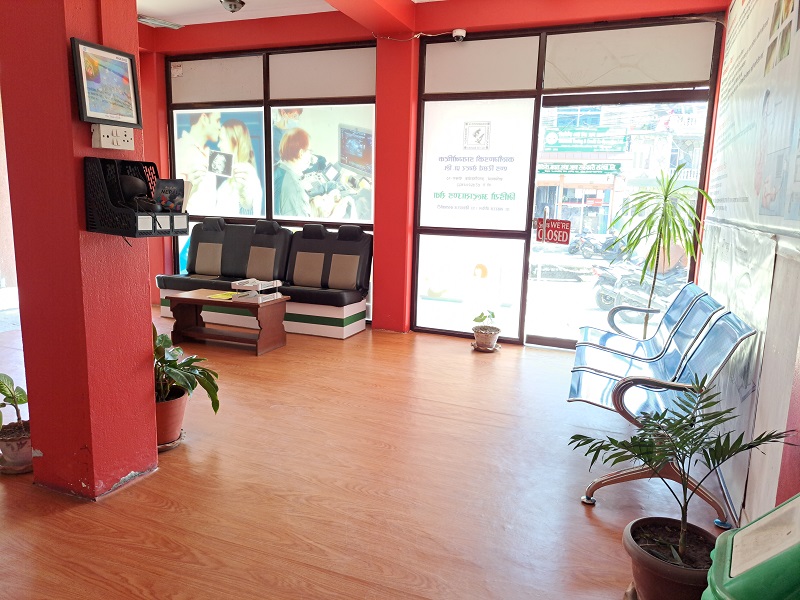
Booking an endoscopy and getting to KDRC
To book an endoscopy at KDRC, call 061-553538 or 9856077433 (mobile/Viber), or use the appointment form. A doctor's referral is usually recommended, because the doctor's question guides what the endoscopist looks for. When you call, ask about fasting, your medicines, and whether sedation is suitable for you. If you are wondering whether we are open on Saturday or a public holiday, please call to confirm a time.
KDRC is on Shantipath at Amarsingh Chowk, Pokhara-10, Kaski. Arrive a little early, already fasting, with your companion, referral slip, earlier reports and medicine list. Avoid driving yourself if sedation might be used. Referring doctors and hospitals can reach our team by phone or email at kaligandaki.dc@gmail.com.

- Tissue samples taken during endoscopy
- Whole-abdomen imaging when needed
- Transport for patients who need it
- Checks liver, gallbladder and pancreas
- Needle test for neck and other lumps
Not sure which test you need? See our full list of diagnostic services or speak with our team.
How to prepare
- Do not eat for at least 6 hours before the test, or as our staff instruct.
- Only small sips of water if allowed; stop when told.
- Tell us about blood thinners (aspirin, clopidogrel, warfarin) and diabetes medicines when booking; do not stop any medicine without your doctor's advice.
- Bring an adult companion, especially if sedation may be used.
- Bring your referral, earlier endoscopy or scan reports and a medicine list.
- Wear loose clothes; you will be asked to remove dentures and spectacles.
How long it takes
The examination usually takes about 10 to 20 minutes, with extra time for check-in and recovery, longer if sedation or biopsies are needed.
Price in Pokhara
Endoscopy cost depends on whether biopsies, sedation or extra tests are needed, so prices are quoted individually. Call 061-553538 or 9856077433 for the current price.
What to expect at KDRC
Arrive at KDRC on Shantipath, Amarsingh Chowk, already fasting, with an adult companion, your referral slip, earlier reports and a list of your medicines. At reception, staff register you and confirm your fasting time, allergies and any blood-thinning or diabetes medicines. The doctor explains the endoscopy, answers your questions and asks for written consent; if you are interested in sedation, this is the time to ask whether it is suitable and available for you. In the procedure room, your throat is numbed with a spray and you lie on your left side with a small mouthguard in place. The doctor gently passes the HD scope and examines the oesophagus, stomach and duodenum on the monitor, usually within 10 to 20 minutes. Any biopsies are taken painlessly through the scope. Afterwards you rest until the numbness wears off, the doctor explains what was seen, and you receive your endoscopy report. If biopsies were taken, our team tells you when the pathology report will be ready to collect for your doctor.
Frequently asked questions
Where can I get an endoscopy in Pokhara?
You can have an HD upper GI endoscopy at Kaligandaki Diagnostic and Research Center (KDRC), Shantipath, Amarsingh Chowk, Pokhara-10. Bring your doctor's referral and come fasting. Call 061-553538 or 9856077433 to book a time and to get preparation instructions for your procedure.
How much does endoscopy cost in Pokhara?
The price depends on whether biopsies are taken, whether sedation is used and any extra tests your doctor requests. KDRC quotes each case individually rather than listing a fixed rate. Call 061-553538 or 9856077433 for the current endoscopy price before your appointment.
Is gastroscopy the same as endoscopy?
Gastroscopy is one type of endoscopy. It examines the food pipe, stomach and duodenum through the mouth, and is also called upper GI endoscopy or OGD/EGD. Endoscopy is the broader term for any camera examination inside the body, such as colonoscopy for the large bowel.
Is endoscopy painful?
Endoscopy should not be painful. The throat is numbed with a spray, and most people feel pressure, gagging or bloating rather than pain. You can signal the team at any time. If you are anxious, ask our team whether sedation is suitable and available for your procedure.
How long should I fast before an endoscopy?
Do not eat for at least 6 hours before the procedure; small sips of water may be allowed until you are told to stop. Some doctors ask for up to 8 hours of fasting. Follow the exact instructions our staff give you when you book, especially if you have diabetes.
How long does an endoscopy take?
The examination itself usually takes about 10 to 20 minutes, though it can take longer if biopsies or other steps are needed. Allow extra time for check-in, preparation and recovery, particularly if sedation is used. Our staff will tell you how long to plan for at the centre.
Can I eat and drive after an endoscopy?
After throat spray only, wait about an hour until swallowing feels normal, then start with sips of water and light food. If you received sedation, an adult should take you home, and you should not drive, drink alcohol or sign important documents for 24 hours.
Is sedation available for endoscopy at KDRC?
Please ask our team when you book. Whether sedation is suitable and available depends on your health and the procedure planned. If sedation is used, you must bring an adult to take you home and stay with you, and you should not drive for 24 hours afterwards.
Can endoscopy detect stomach cancer?
Endoscopy lets the doctor see abnormal areas of the oesophagus, stomach and duodenum directly. Cancer is confirmed or ruled out by a biopsy taken during the procedure and examined by a pathologist. Many abnormal-looking areas turn out to be inflammation or ulcers, so wait for the pathology report.
When will I get my endoscopy and biopsy results?
The endoscopist explains the visual findings before you leave, and a written report is prepared. Biopsy samples go to a pathology laboratory, so that report usually follows after several working days or more. Our team will tell you when to collect it for your doctor.
Can I have an endoscopy during pregnancy?
Endoscopy uses no radiation, but it is usually postponed during pregnancy unless the information is needed urgently, such as for significant bleeding. Tell our staff and your doctor if you are or may be pregnant, so the timing and any sedative medicine can be planned safely.
Can children have an endoscopy at KDRC?
Children sometimes need endoscopy for swallowing problems, bleeding or a swallowed object. Paediatric endoscopy needs suitable equipment and careful sedation planning, so please call our team before booking a child and bring the paediatrician's referral and any earlier reports. We will advise whether it can be done here or elsewhere.
What are the risks of an upper GI endoscopy?
Serious problems are rare. Common effects are a sore throat and bloating for a few hours. Less often there is minor bleeding after a biopsy. Rare risks include perforation, significant bleeding, infection and reactions to sedation. Seek urgent care if you vomit blood, pass black stools or develop severe pain.
Do I need a doctor's referral for endoscopy?
A referral is recommended because your doctor's question guides what the endoscopist looks for and how results are followed up. Bring the referral slip and earlier reports. If you do not have one, call 061-553538 or 9856077433 and our team will advise you on the next step.
Is KDRC open for endoscopy on Saturday?
Please call 061-553538 or 9856077433 to confirm available days and times for endoscopy, including Saturdays and public holidays. Booking ahead lets our team plan your fasting instructions and make sure the doctor and equipment are ready for your procedure. Remember to come fasting.
Sources
- nhs.uk/conditions/gastroscopy/
- niddk.nih.gov/health-information/diagnostic-tests/upper-gi-endoscopy
- medlineplus.gov/ency/article/003888.htm
- nhs.uk/tests-and-treatments/endoscopy/
- nhs.uk/tests-and-treatments/biopsy/
This page is general health information reviewed by our radiologists. It is not a diagnosis — always follow your own doctor's advice. In an emergency, call our 24-hour ambulance or go to the nearest emergency department.
Shantipath, Amarsingh Chowk, Pokhara-10, Kaski · 061553538 / 9856077433
Related services in Pokhara
192 Slice High Resolution CT Scan
A CT scan in Pokhara at KDRC is a fast, painless X-ray test that uses a computer to create detailed cross-sectional imag…
High Definition Ultrasound
Ultrasound (USG, sonography) in Pokhara at KDRC is a painless, radiation-free scan that uses high-frequency sound waves …
FNAC
An FNAC test in Pokhara at KDRC is fine needle aspiration cytology: a very thin needle draws cells from a lump, often un…
Biopsy
A biopsy test in Pokhara at KDRC is a procedure in which a small tissue sample is taken from a lump or abnormal area, us…