
FNAC Test in Pokhara — Ultrasound-Guided Fine Needle Aspiration
An FNAC test in Pokhara at KDRC is fine needle aspiration cytology: a very thin needle draws cells from a lump, often under ultrasound guidance, for a pathologist to examine. It is a quick, low-risk first test for thyroid nodules, neck lymph nodes, breast and other lumps, with no cut or stitches.
Also called: fine needle aspiration, fnac test, needle test, fine needle aspiration cytology, fna, fna biopsy
 FNACKDRC · Pokhara
- Duration
- The needle sampling usually takes only a few minutes
- Reported by
- Consultant radiologists
- Location
- Amarsingh Chowk, Pokhara-10
- Book / price
- 061553538 · 9856077433
- FNAC uses a very fine needle to collect cells from a lump for examination by a pathologist.
- Ultrasound-guided FNAC at KDRC is performed by consultant radiologists for small or deep lumps.
- No fasting is needed, but tell us about blood thinners before the test.
- FNAC collects cells; a core biopsy collects tissue when more detail is needed.
- Prices are quoted individually; call 061-553538 or 9856077433 for the current cost.
On this page (14 sections)
- What is FNAC?
- Which lumps can be tested with FNAC?
- Palpation-guided vs ultrasound-guided FNAC
- FNAC vs core needle biopsy: what is the difference?
- How to prepare for an FNAC test
- What happens during an FNAC test at KDRC?
- Is FNAC painful? Safety and side effects
- Thyroid FNAC in Pokhara: understanding your result
- Lymph node FNAC in Pokhara
- FNAC in pregnancy, children and people on blood thinners
- FNAC results: what happens to the sample?
- How much does an FNAC test cost in Pokhara?
- Why choose KDRC for FNAC in Pokhara?
- Booking an FNAC test and getting to KDRC
What is FNAC?
An FNAC test in Pokhara at Kaligandaki Diagnostic and Research Center (KDRC) is fine needle aspiration cytology: a very thin needle is passed into a lump or swelling to draw out a small number of cells, which are spread on glass slides and examined under a microscope by a pathologist. It is one of the quickest and least invasive ways to find out what a lump is made of.
"Fine needle aspiration" describes the method, and "cytology" means the study of cells. RadiologyInfo describes FNA as a very small needle attached to a syringe that withdraws fluid or clusters of cells. Because the needle is so thin, MedlinePlus notes that numbing medicine is often optional. There is no cut and no stitches, and most people return to normal activity straight away.
FNAC is most often used for swellings in the neck, especially thyroid nodules and enlarged lymph nodes, and for breast, salivary gland and other lumps just under the skin. At KDRC it can be done by feeling the lump (palpation) or, for small and deep lumps, under live guidance from our HD ultrasound.
Which lumps can be tested with FNAC?
FNAC can test almost any lump that can be felt or seen on ultrasound and reached safely with a fine needle. Your doctor or radiologist decides whether FNAC is the right first test for your lump. The table below shows common sites and what the test can help clarify.
| Site | Why FNAC is done | What the cells can show |
|---|---|---|
| Thyroid nodule | A nodule found on examination or ultrasound | Benign nodule, thyroiditis, suspicious or cancerous cells |
| Neck lymph node | A node that is enlarged, hard or not settling | Reactive change from infection, tuberculosis, lymphoma or spread of cancer |
| Breast lump | A lump felt by you or your doctor, or seen on imaging | Cyst, fibroadenoma, infection, suspicious cells |
| Salivary gland | Swelling in front of the ear or under the jaw | Inflammation, benign or malignant tumour |
| Soft-tissue lump | A lump under the skin elsewhere on the body | Fatty lump (lipoma), cyst, abscess, other growths |
| Cyst or fluid collection | To drain fluid and check its cells | Benign fluid, infection, abnormal cells |
Breast lumps: FNAC or core biopsy?
For breast lumps, FNAC is useful for draining cysts and sampling simple-looking lumps, but many breast specialists prefer a core needle biopsy for solid lumps because it gives the pathologist more tissue. RadiologyInfo notes that a breast core biopsy usually takes three to six samples. Your doctor and radiologist will advise which test suits your lump.
FNAC answers the question "what kind of cells are in this lump?" It does not replace imaging. Most patients first have an ultrasound scan, which shows the size, position and appearance of the lump and the safest needle path.
Palpation-guided vs ultrasound-guided FNAC
Ultrasound-guided FNAC is preferred when a lump is small, deep, partly cystic or close to blood vessels, because the radiologist can watch the needle tip enter the exact target on screen. Palpation-guided FNAC, done by feeling the lump with the fingers, suits larger lumps just under the skin. The American Thyroid Association notes that when ultrasound guides a thyroid biopsy, a non-diagnostic sample occurs in fewer than 5% of cases.
| Feature | Palpation-guided | Ultrasound-guided |
|---|---|---|
| Best for | Larger lumps easily felt under the skin | Small, deep, cystic or hard-to-feel lumps |
| Needle position | Judged by touch | Watched live on the HD ultrasound screen |
| Target | The lump as a whole | The most informative part, such as a solid area |
| Performed by | A qualified doctor | A consultant radiologist |
| Repeat sampling | More likely if the sample is scanty | Lower non-diagnostic rate for thyroid nodules |
At KDRC, ultrasound-guided FNAC is performed by our consultant radiologists, who scan the swelling first and then sample it in the same sitting. This avoids a separate trip for the scan and lets the radiologist choose the most informative part of the lump, for example the solid portion of a mixed nodule rather than the fluid.
FNAC vs core needle biopsy: what is the difference?
FNAC collects loose cells through a very thin needle, while a core needle biopsy uses a slightly larger, spring-loaded needle to remove thin cylinders of tissue that keep their structure. RadiologyInfo explains that a core needle collects one tissue "core" per insertion and is usually repeated three to six times for a breast lump. Both samples go to a pathology laboratory, but they answer slightly different questions.
| Feature | FNAC | Core needle (trucut) biopsy |
|---|---|---|
| Sample | Loose cells and fluid | Thin cylinders of tissue |
| Needle | Very fine, attached to a syringe | Larger, spring-loaded hollow needle |
| Local anaesthetic | Often optional | Usually given |
| Laboratory test | Cytology (cells on slides) | Histopathology (tissue sections) |
| Shows tissue structure? | No, only individual cells | Yes, how cells are arranged |
| Typical uses | Thyroid nodules, lymph nodes, cysts, superficial lumps | Breast lumps, larger masses, when FNAC is unclear |
| Recovery | Immediate; small plaster | Brief; small dressing, avoid strenuous activity for about 24 hours |
Neither test is "better" in every case. FNAC is quicker and gentler, and is often enough to answer the question. If the cells are inconclusive, or the diagnosis depends on tissue architecture, as in some lymphomas, your doctor may recommend a core biopsy, which is also available at KDRC.
How to prepare for an FNAC test
FNAC needs very little preparation: you can usually eat, drink and take your normal medicines. The American Thyroid Association notes that fasting is not required for thyroid FNA. The most important step is to tell us about blood thinners, because MedlinePlus advises that medicines such as aspirin, clopidogrel or warfarin may need to be paused for a few days. Never stop a prescribed medicine without asking the doctor who prescribed it.
- Eat, drink and take normal medicines unless told otherwise
- Tell us about blood thinners such as aspirin, clopidogrel or warfarin
- Do not stop any medicine without your prescribing doctor's advice
- Mention allergies, bleeding problems and pregnancy
- Wear clothing that gives easy access to the lump
- Bring your referral and earlier ultrasound or FNAC reports
Wear a top that makes the area easy to reach, such as an open-necked shirt for a neck lump. Bring your referral slip and any earlier ultrasound or FNAC reports, because comparing them helps the radiologist target the right lump.
What happens during an FNAC test at KDRC?
An FNAC test at KDRC is a short outpatient procedure in which the needle itself is in the lump for only seconds at a time. The whole visit is mostly registration, positioning and a short rest afterwards.
- Check-in. Staff confirm your details, referral, allergies and any blood-thinning medicines.
- Scan and plan. For guided FNAC, the radiologist scans the lump with ultrasound to choose the best target and path.
- Clean the skin. The skin is cleaned with antiseptic. Local anaesthetic may be used, though it is often unnecessary with such a fine needle.
- Take the sample. The needle is moved gently within the lump for a few seconds. The ATA notes that several samples are usually taken from different parts of a thyroid nodule.
- Prepare the slides. The cells are spread on glass slides and labelled for the pathology laboratory.
- Pressure and plaster. Firm pressure stops any bleeding and a small plaster is applied. You can usually leave soon after.
- 1RegisterBring your referral and medicine list; staff check allergies and blood thinners.
- 2Scan the lumpFor guided FNAC, the radiologist uses HD ultrasound to choose the target and needle path.
- 3Clean the skinAntiseptic is applied; local anaesthetic is used if needed.
- 4Aspirate the cellsA very fine needle is moved within the lump for a few seconds, often in several passes.
- 5Prepare slidesCells are spread on labelled slides for the pathology laboratory.
- 6Pressure and plasterPressure stops bleeding, a plaster goes on and you can resume normal activity.
Is FNAC painful? Safety and side effects
FNAC is usually no more painful than a blood test. MedlinePlus describes a sting if numbing medicine is injected and a feeling of pressure as the needle enters the thyroid, but not pain. Afterwards there may be mild discomfort and slight bruising that fades quickly.
- Common: mild soreness and a small bruise at the needle site.
- Uncommon: a small collection of blood (haematoma) under the skin.
- Rare: infection, or for thyroid FNA, bleeding in or around the gland. MedlinePlus notes that severe bleeding pressing on the windpipe is rare.
RadiologyInfo reports that infections needing antibiotics after needle biopsy occur in fewer than one in 1,000 cases. FNAC uses no radiation; ultrasound guidance uses sound waves.
After a thyroid or neck FNAC, seek emergency care at once if the neck swells quickly, or if you have difficulty breathing or swallowing. Contact a doctor if the site keeps bleeding despite firm pressure, becomes increasingly painful, red or hot, or if you develop a fever.
Thyroid FNAC in Pokhara: understanding your result
Thyroid FNAC is the standard test for deciding whether a thyroid nodule needs treatment, and most results are reassuring. According to the American Thyroid Association, more than 90% of thyroid nodules are benign. Thyroid cytology reports use standard result categories, which the ATA summarises as follows.
| Result category | Approximate share of FNAs (ATA) | What it usually means |
|---|---|---|
| Benign | Up to 80% | Non-cancerous; follow-up is usually by ultrasound. The risk of a missed cancer is generally under 3%. |
| Malignant | About 5% | Cancer cells seen, most often papillary cancer; surgical referral is usual. |
| Suspicious for malignancy | Included with malignant results | A cancer risk of about 50–75%; surgery is usually advised. |
| Indeterminate | Up to 20% | Cells cannot be classed reliably; repeat FNA or surgery may be advised. |
| Non-diagnostic | Under 5% with ultrasound guidance | Not enough cells; often seen with cysts. A repeat FNA may be needed. |
Your endocrinologist, ENT surgeon or physician will interpret the report together with your thyroid blood tests and ultrasound findings. A non-diagnostic result is not a failure; it simply means the test needs repeating.
What happens after a benign thyroid FNAC?
A benign result usually means the nodule can be watched rather than removed. Your doctor will normally arrange follow-up ultrasound scans to check that the nodule stays stable in size and appearance. Surgery may still be discussed if a benign nodule is large enough to cause pressure symptoms, such as difficulty swallowing, or for cosmetic reasons. If a nodule grows noticeably or its appearance changes on a later scan, a repeat FNAC may be recommended.
Lymph node FNAC in Pokhara
Lymph node FNAC is commonly used to find out why a node in the neck, armpit or groin has become enlarged. Most enlarged nodes are a reaction to infection, but a node that is hard, growing or persists for weeks needs checking. MedlinePlus lists causes of abnormal lymph node results ranging from mild infections to tuberculosis, lymphoma and cancers such as breast, lung and oral cancer.
In Nepal, tuberculous lymphadenitis is an important cause of neck swelling, and FNAC is a common first test for it. The aspirated material can be examined for features of tuberculosis, and your doctor may request extra laboratory stains on the sample. If lymphoma is suspected, a core biopsy or surgical removal of a node is often needed, because the pathologist must see how the cells are arranged.
Before FNAC, an ultrasound of the neck shows the size and internal structure of the node. Some features help the radiologist choose which node to sample. Further imaging, such as a CT scan, may be added by your doctor if a wider view of the chest or abdomen is needed.
FNAC in pregnancy, children and people on blood thinners
FNAC is generally safe for most people, including in special situations, as long as the team knows about them in advance.
During pregnancy
FNAC involves no radiation, and ultrasound guidance uses sound waves, so it can usually be done during pregnancy when your doctor feels the result cannot wait. Tell us you are pregnant so we can position you comfortably and plan any local anaesthetic.
Children
Children often have enlarged neck nodes from infections, and most do not need FNAC. When a child's doctor does request it, the fine needle and short procedure make it well tolerated. A parent can stay with the child; please call ahead so we can plan the visit.
Blood thinners and bleeding disorders
Mention aspirin, clopidogrel, warfarin, newer blood thinners, herbal supplements and any bleeding tendency when booking. The doctor who prescribed your medicine decides whether it should be paused.
FNAC results: what happens to the sample?
FNAC samples are sent to a pathology laboratory, where a pathologist stains the slides and examines the cells under a microscope before issuing a cytology report. The radiologist or doctor who takes the sample does not give the final diagnosis; the pathologist does. Staining and careful reading take time, so the report usually follows within a few working days. Our team will tell you when to collect it.
Take the report to the doctor who referred you. They will explain the result, compare it with your ultrasound findings and decide on next steps, which may be reassurance, follow-up scans, a repeat FNAC, a core biopsy or a surgical opinion.
How much does an FNAC test cost in Pokhara?
The cost of an FNAC test in Pokhara depends mainly on whether ultrasound guidance is needed, how many sites are sampled and which laboratory tests the pathologist performs. KDRC quotes each case individually rather than publishing a single fixed price. Call 061-553538 or 9856077433 for the current FNAC price.
| Cost factor | Effect on the total |
|---|---|
| Palpation-guided FNAC | Sampling of a lump that can be felt easily |
| Ultrasound-guided FNAC | Adds the guiding ultrasound by a radiologist |
| Number of lumps or sites | Each additional site adds sampling and slides |
| Extra laboratory stains or tests | Requested by your doctor or the pathologist when needed |
| Diagnostic ultrasound of the area | Quoted separately if you have not had a recent scan |
Why choose KDRC for FNAC in Pokhara?
KDRC combines HD ultrasound and experienced consultant radiologists in one place, so your lump can be scanned and sampled accurately in a single visit. Ultrasound-guided FNAC at KDRC is performed by our consultant radiologists.
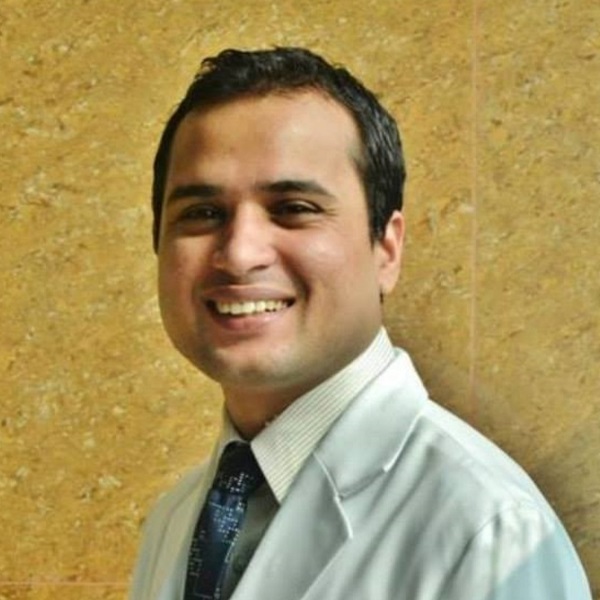
- Dr. Bishworaj Bastakoti, consultant radiologist since the institute's inception, trained at the National Kidney and Transplant Institute, Manila, and a Diplomate of the Philippine College of Radiology.
- Dr. Nawaraj Paudel, consultant radiologist since inception and former assistant professor of radiology at Universal College of Medical Sciences, trained at East Avenue Medical Centre, Manila.
Both are members of the Nepal Radiologist Society and NMC-registered radiologists since 2016. Learn more about our radiologists.
- Scan and sample in one sitting. The same radiologist who scans the lump guides the needle, so the target matches the imaging.
- Clear referral pathway. Slides go to a pathology laboratory and the cytology report comes back to you for your doctor.
- Further tests under one roof. If more detail is needed, colour Doppler, core biopsy and CT are available at KDRC. See all our diagnostic services.

Booking an FNAC test and getting to KDRC
To book an FNAC at KDRC, call 061-553538 or 9856077433 (mobile/Viber), or use the appointment form. A doctor's referral is recommended so the radiologist knows which lump to sample and why. If you want to know whether we can see you on a Saturday or holiday, please call to confirm a time.
KDRC is on Shantipath at Amarsingh Chowk, Pokhara-10, Kaski. Bring your referral, earlier scan or FNAC reports and a list of medicines. No fasting is needed, and you can usually travel home normally afterwards. Referring doctors can contact our team by phone or at kaligandaki.dc@gmail.com.
- Scans the lump and guides the needle
- Shows blood flow in and around a lump
- Camera test with biopsy for the upper digestive tract
- Core tissue sample when cells are not enough
- Wider imaging when your doctor needs it
How to prepare
- No fasting needed; eat, drink and take normal medicines unless told otherwise.
- Tell us about blood thinners (aspirin, clopidogrel, warfarin) and bleeding problems; do not stop any medicine without your doctor's advice.
- Mention allergies and pregnancy.
- Wear clothing that gives easy access to the lump, such as an open-necked top for neck swellings.
- Bring your referral and earlier ultrasound or FNAC reports.
How long it takes
The needle sampling usually takes only a few minutes, with extra time for registration, the guiding ultrasound and a short rest afterwards.
Price in Pokhara
FNAC cost depends on whether ultrasound guidance is needed, the number of sites sampled and any extra laboratory tests. Call 061-553538 or 9856077433 for the current price.
What to expect at KDRC
Arrive at KDRC on Shantipath, Amarsingh Chowk, with your referral slip, any earlier ultrasound or FNAC reports and a list of your medicines. No fasting is needed. At reception, staff register you and check allergies and blood-thinning medicines. For an ultrasound-guided FNAC, the consultant radiologist first scans the lump on our HD ultrasound to choose the most informative target and a safe path. You lie comfortably while the skin is cleaned with antiseptic; local anaesthetic may be offered, although it is often unnecessary with such a fine needle. The needle is then moved gently within the lump for a few seconds, usually in several short passes, and the cells are spread on labelled glass slides. Firm pressure is applied and a small plaster placed over the site. You can usually leave soon afterwards and return to normal activities. The slides go to a pathology laboratory, and our team tells you when the cytology report will be ready to collect for your doctor.
Frequently asked questions
Where can I get an FNAC test in Pokhara?
FNAC is available at Kaligandaki Diagnostic and Research Center (KDRC), Shantipath, Amarsingh Chowk, Pokhara-10. Ultrasound-guided FNAC is performed by our consultant radiologists, and samples are reported by a pathologist. Call 061-553538 or 9856077433 to book and bring your doctor's referral.
How much does FNAC cost in Pokhara?
The FNAC price depends on whether ultrasound guidance is needed, how many lumps are sampled and any extra laboratory tests requested. KDRC quotes each case individually rather than publishing a fixed rate. Call 061-553538 or 9856077433 for the current FNAC price before you visit.
What is the full form of FNAC?
FNAC stands for fine needle aspiration cytology. A very thin needle draws cells from a lump, and the cells are examined under a microscope by a pathologist. It is also called fine needle aspiration (FNA), fine needle aspiration biopsy or simply a needle test.
Is FNAC painful?
Most people find FNAC no more painful than a blood test. You may feel a brief sting and some pressure while the fine needle is in the lump. Afterwards there may be mild soreness or a small bruise that fades within a few days. No stitches are needed.
Do I need to fast before FNAC?
No. You can usually eat, drink and take your normal medicines before FNAC. The important exception is blood thinners such as aspirin, clopidogrel or warfarin: tell us when booking, and ask your prescribing doctor whether to pause them. Never stop a medicine on your own.
How long does an FNAC test take?
The needle sampling itself takes only a few minutes, often in several short passes. With registration, an ultrasound check of the lump for guided FNAC and a short rest afterwards, plan for a little longer at the centre. Our staff can tell you how much time to allow.
What is the difference between FNAC and biopsy?
FNAC draws loose cells through a very fine needle, while a core biopsy removes small cylinders of tissue that keep their structure. FNAC is quicker and gentler; a core biopsy gives the pathologist more information. Your doctor chooses based on the lump and the question being asked.
How accurate is FNAC for thyroid nodules?
Thyroid FNAC is the standard test for nodules. The American Thyroid Association reports that up to 80% of results are benign, with a missed-cancer risk generally under 3%. Up to 20% are indeterminate, and with ultrasound guidance fewer than 5% are non-diagnostic and need repeating.
Can FNAC detect tuberculosis in a lymph node?
FNAC is a common first test for an enlarged neck node, and the cells can show features suggesting tuberculosis. Your doctor may request extra laboratory stains on the sample. If the result is unclear, further tests or a core biopsy may be advised to confirm the cause.
When will I get my FNAC report?
FNAC slides are stained and examined by a pathologist in a laboratory, so the cytology report usually follows within a few working days. Our team will tell you when to collect it. Take the report to your referring doctor, who will explain the result and plan any next steps.
Is FNAC safe during pregnancy?
FNAC uses no radiation, and ultrasound guidance uses sound waves, so it can usually be done during pregnancy when your doctor feels the result should not wait. Tell our staff that you are pregnant so we can position you comfortably and plan any local anaesthetic safely.
Can children have FNAC?
Yes, when a child's doctor requests it. Most enlarged nodes in children are due to infection and settle without testing, but persistent or unusual lumps may need FNAC. The fine needle and short procedure are usually well tolerated, and a parent can stay with the child throughout.
Can FNAC spread cancer?
FNAC uses a very fine needle and is a routine, well-established first test for lumps, including those that might be cancer. Your doctor recommends it because knowing the diagnosis guides the right treatment. If you are worried, discuss your concerns with your doctor or our radiologist before the procedure.
What does an inadequate or non-diagnostic FNAC mean?
It means the sample did not contain enough cells for a reliable answer. This happens more often with cystic lumps. It is not a diagnosis and is not a bad result. Your doctor may advise a repeat FNAC, preferably under ultrasound guidance, or a core biopsy instead.
Can I go back to work after FNAC?
Yes. Most people return to normal activities, including work and driving, straight after FNAC. Keep the small plaster on for a few hours. Contact a doctor if the site bleeds despite pressure, becomes red and painful, or if you develop fever or neck swelling.
Sources
- thyroid.org/thyroid-nodules/
- medlineplus.gov/ency/article/003899.htm
- medlineplus.gov/ency/article/003933.htm
- radiologyinfo.org/en/info/biopgen
- radiologyinfo.org/en/info/breastbius
This page is general health information reviewed by our radiologists. It is not a diagnosis — always follow your own doctor's advice. In an emergency, call our 24-hour ambulance or go to the nearest emergency department.
Shantipath, Amarsingh Chowk, Pokhara-10, Kaski · 061553538 / 9856077433
Related services in Pokhara
192 Slice High Resolution CT Scan
A CT scan in Pokhara at KDRC is a fast, painless X-ray test that uses a computer to create detailed cross-sectional imag…
High Definition Ultrasound
Ultrasound (USG, sonography) in Pokhara at KDRC is a painless, radiation-free scan that uses high-frequency sound waves …
Biopsy
A biopsy test in Pokhara at KDRC is a procedure in which a small tissue sample is taken from a lump or abnormal area, us…
Doppler Ultrasound
A Doppler test in Pokhara at KDRC is a colour Doppler ultrasound scan that measures the speed and direction of blood flo…