
5D Ultrasound in Pokhara — AI-Assisted Lifelike Baby Scan
5D ultrasound in Pokhara at KDRC is a 3D/4D pregnancy scan whose images are rendered with AI-assisted software, giving lifelike skin tones, natural lighting and depth. It is not a separate machine or a fifth dimension; it uses the same safe sound waves, is best done at about 26–30 weeks, and is added to a medically indicated scan.
Also called: 5D USG, 5d scan, 5d baby scan, ai ultrasound, ai baby scan, 4d ultrasound with ai
 5D USGKDRC · Pokhara
- Duration
- The 5D part of the scan is usually kept to a short
- Reported by
- Consultant radiologists
- Location
- Amarsingh Chowk, Pokhara-10
- Book / price
- 061553538 · 9856077433
- 5D ultrasound is 3D/4D volume data rendered with AI-assisted software for lifelike, photo-like images; it is not a fifth physical dimension.
- KDRC creates 5D images with AI-assisted rendering on its HD 3D/4D ultrasound system rather than a separate “5D machine”.
- The most lifelike 5D pictures usually come at about 26–30 weeks, when the cheeks have filled out and there is still enough fluid around the face.
- 5D adds no extra risk beyond ordinary ultrasound and no ionising radiation, but it is added to a medically indicated scan, not done on its own.
- 5D does not replace the 18–22 week anomaly scan, and KDRC never determines or discloses the baby’s sex.
- Call 061-553538 or 9856077433 to book 5D ultrasound in Pokhara.
On this page (12 sections)
- What is 5D ultrasound?
- Is 5D ultrasound real? The honest answer
- How does AI create a 5D baby image?
- 4D vs 5D ultrasound: what is the difference?
- When is the best time for a 5D ultrasound?
- What can 5D ultrasound show — and what can’t it?
- Is 5D ultrasound safe for my baby?
- How to get the best 5D pictures of your baby
- What happens during a 5D ultrasound at KDRC?
- Can 5D ultrasound show the baby’s sex?
- How much does a 5D ultrasound cost in Pokhara?
- Why choose KDRC for 5D ultrasound in Pokhara?
What is 5D ultrasound?
5D ultrasound is a pregnancy scan in which the 3D and 4D image of your baby is processed by AI-assisted rendering software, so the face appears with realistic skin tones, soft natural lighting and depth instead of the flat golden colour of a standard 3D picture. If you are looking for 5D ultrasound in Pokhara, Kaligandaki Diagnostic and Research Center (KDRC) at Shantipath, Amarsingh Chowk, offers AI-assisted 5D imaging on its HD ultrasound system with 3D, 4D and volume scanning, with scans reported by consultant radiologists.
Every ultrasound starts in the same way. A probe on your tummy sends out high-frequency sound waves and listens for the echoes. A standard scan shows those echoes as a live black-and-white slice (2D). When the system collects many slices at once it builds a block of data called a volume (3D), and when that volume is refreshed many times a second you see your baby move (4D). “5D” describes what happens next: software, increasingly driven by artificial intelligence, decides how that volume is lit, coloured and shaded so the picture looks closer to a photograph.
That is why 5D is best understood as a way of rendering the scan, not a new kind of scan. It is a lovely way to meet your baby before birth, but it sits on top of good medical scanning. The detailed check of your baby’s organs is done on the anomaly scan at 18–22 weeks, and routine pregnancy scans are covered on our fetal ultrasound page.
Is 5D ultrasound real? The honest answer
5D ultrasound is real in the sense that the images look genuinely different and more lifelike, but “5D” is a marketing name, not a fifth physical dimension. Ultrasound has three dimensions of space and one of time; nothing in the physics adds a fifth. The extra “D” stands for the rendering layer that makes the picture look natural.
Different manufacturers sell this rendering under their own brand names, and many clinics simply call it 5D or HD live imaging. Some centres advertise a “5D machine”. In practice, the lifelike look comes from the rendering software and the skill of the person scanning, applied to good-quality 3D/4D volume data.
At KDRC we prefer to be clear about what you are getting. We do not use a separately branded 5D machine. Our 5D images are produced with AI-assisted rendering applied to the volume data from our HD 3D/4D ultrasound system. The result is the same kind of realistic, photo-like baby face that people mean when they search for a 5D scan, without paying for a label. If you would rather have a standard golden 3D/4D session, see our 4D ultrasound in Pokhara page.
How does AI create a 5D baby image?
AI creates a 5D image by recognising the baby’s skin surface inside the 3D volume, separating it from the fluid, cord and placenta around it, and then lighting and colouring that surface as a camera would see it. Each step happens in seconds while you watch on the screen.
The work can be broken into four stages:
- Capturing the volume. The sonologist sweeps the probe over the baby’s face to collect a 3D block of echoes. A clear pocket of amniotic fluid in front of the face is the single most important ingredient.
- Finding the surface. Software identifies where skin ends and fluid begins. AI-assisted tools help trim away objects in front of the face, such as a hand, the umbilical cord or the wall of the womb, and reduce the grainy “speckle” that all ultrasound images contain.
- Virtual lighting. Instead of lighting the face from straight ahead, the software places a virtual light source that can be moved around the baby. Light passing through and around the skin creates soft shadows, depth and a glow at the edges of the ears and fingers. This is what makes 5D look three-dimensional on a flat screen.
- Realistic colour and finishing. Skin-like colour tones replace the traditional sepia, and the image is smoothed so features such as lips, eyelids and the nose look natural rather than waxy.
The table below shows what the AI-assisted rendering does and does not do on a 5D scan.
| AI-assisted rendering does | AI-assisted rendering does not |
|---|---|
| Separate the baby’s face from surrounding fluid, cord and placenta | Invent features the scan did not capture |
| Reduce speckle and smooth the surface | Make a blurred volume sharp if the baby was moving or covered |
| Apply movable virtual lighting and soft shadows | Predict what your baby will look like after birth |
| Use realistic skin-like colour tones | Diagnose, measure or check your baby’s organs on its own |
| Speed up the workflow so scanning time stays short | Replace the radiologist’s review or the medical 2D examination |
Every 5D session at KDRC is performed alongside a proper medical scan, and our consultant radiologists, Dr. Bishworaj Bastakoti and Dr. Nawaraj Paudel, review the medical images and report. You can read about them on our doctors page.
4D vs 5D ultrasound: what is the difference?
The difference between 4D and 5D ultrasound is only in how the moving 3D image is rendered: 4D shows it with standard shading, usually in a golden or sepia tone, while 5D adds AI-assisted realistic lighting, skin tones and depth. Both use the same probe, the same sound waves and the same scan time.
| Feature | 4D ultrasound | 5D ultrasound |
|---|---|---|
| Image | Moving 3D, standard golden shading | Moving or still 3D with lifelike lighting and skin tones |
| How it is made | Standard volume rendering | AI-assisted rendering of the same volume data |
| Best for | Watching movements and expressions | Natural, photo-like portraits of the face |
| Sound waves and safety | Same | Same |
| Replaces anomaly scan? | No | No |
This table compares 2D, 3D, 4D and 5D ultrasound side by side, so you can choose what suits you.
| Type | What you see | Main purpose | Where to read more at KDRC |
|---|---|---|---|
| 2D | Live black-and-white slices | All medical checks and measurements | Fetal ultrasound |
| 3D | Still, surface-shaded picture built from a volume | Extra views of the face, lip, hands and feet | 4D ultrasound |
| 4D | 3D picture moving in real time, standard shading | Watching yawns, stretches and expressions | 4D ultrasound |
| 5D | Moving or still 3D picture with AI-assisted lifelike lighting and skin tones | The most natural, photo-like keepsake images | This page |
In everyday terms: choose 4D if you mainly want to watch your baby move, and choose 5D if a natural-looking portrait of the face matters most to you. Many parents enjoy both in the same visit, because the same volume data can be shown either way.
When is the best time for a 5D ultrasound?
The best time for a 5D ultrasound is usually between about 26 and 30 weeks of pregnancy, when the baby’s cheeks and lips have filled out with fat but there is still plenty of fluid in front of the face. The wider window for good 3D/4D/5D pictures is roughly 24–32 weeks.
The table below explains how 5D images typically look at different stages of pregnancy.
| Weeks of pregnancy | What a 5D image usually looks like | Our advice |
|---|---|---|
| Before 20 weeks | Baby is small and lean; features look bony; the whole body may fit in one view | Focus on dating, NT and anomaly scans; 5D faces look less natural |
| 20–25 weeks | Features are clear but the face is still thin | Possible, especially if combined with a scan your doctor has requested |
| 26–30 weeks | Fuller cheeks and lips, good fluid around the face | The sweet spot for the most lifelike 5D portraits |
| 31–34 weeks | Baby is bigger and often pressed against the womb or placenta | Still worth trying; images depend more on position |
| After 34 weeks | Less fluid and less room; the face is often hidden | Clear 5D faces become harder; medical scans take priority |
If your doctor has already asked for a growth scan or a colour Doppler study in the third trimester, ask whether 5D views can be added in the same visit. This avoids an extra trip and keeps the total scanning time sensible.
What can 5D ultrasound show — and what can’t it?
5D ultrasound shows the outside of your baby — the face, expressions, hands, feet and skin surface — in lifelike detail, but it cannot check the heart, brain, kidneys or other internal organs. Those checks need standard 2D images taken by a trained sonologist.
What parents commonly see on a 5D scan:
- The shape of the face, nose, lips and chin, often with family resemblances parents enjoy spotting.
- Expressions such as yawning, frowning, smiling-like movements and sucking a thumb, when shown live.
- Hands and fingers near the face, feet and toes, depending on position.
- In twin pregnancies, sometimes both babies’ faces, although this depends heavily on position.
What 5D cannot do:
- Replace the anomaly scan, which systematically checks the baby’s organs at 18–22 weeks.
- Measure growth, check the placenta or assess blood flow; these are done on a fetal ultrasound or a Doppler study.
- Show exactly what your baby will look like after birth. The rendering is a realistic interpretation of the scan, not a photograph.
A beautiful 5D picture does not mean every organ has been checked. Keep your anomaly scan and the scans your doctor requests. If you notice reduced baby movements, bleeding, leaking fluid, severe pain or headache with blurred vision, seek urgent medical care — do not wait for a scan appointment.
Is 5D ultrasound safe for my baby?
5D ultrasound is as safe as any other pregnancy ultrasound when it is done by trained staff for a sensible length of time, because the AI rendering happens on the computer after the sound waves have returned, not inside your body. Ultrasound uses sound waves, not ionising radiation, and the NHS notes there are no known risks to the baby or mother from pregnancy scans.
Health regulators still recommend care. The US FDA advises against “keepsake” ultrasound performed without a medical reason, because ultrasound can slightly heat tissue and the long-term effects of prolonged exposure are not fully known. Professional bodies such as the AIUM recommend the ALARA principle — keeping exposure as low as reasonably achievable.
KDRC follows that approach for 5D ultrasound in Pokhara:
- 5D views are added to a medically indicated pregnancy scan, never offered as a stand-alone entertainment session.
- The 3D/4D/5D part of the scan is kept short and focused.
- If the baby will not show the face, we do not keep scanning for a long time to force a picture.
- Scans are performed and reported by trained staff and consultant radiologists.
How to get the best 5D pictures of your baby
The best 5D pictures come from good timing, enough fluid in front of the face and a baby who is facing the probe — and a few simple steps can improve your chances. None of them are required for the medical scan; they simply help the rendering look its best.
- Book at about 26–30 weeks if you can
- Drink water normally in the days before the scan
- Have a light snack beforehand — a baby that is awake may move into a better position
- Wear a two-piece outfit so your tummy is easy to reach
- Empty your bladder unless you are told otherwise
- Be ready to walk or change position if the baby is facing away
- Bring your doctor’s request and previous scan reports
Some factors are outside anyone’s control. An anterior placenta (lying at the front of the womb), low amniotic fluid, a baby lying face-down or with hands and cord across the face, twins, and a thicker abdominal wall can all make a clear 5D face harder to capture. They do not make the scan unsafe. The sonologist will usually try simple measures first — walking for a few minutes, changing your position, or a short break — before explaining the options.
What happens during a 5D ultrasound at KDRC?
A 5D ultrasound at KDRC is part of a normal pregnancy scan visit: the medical 2D examination comes first, and the 3D/4D volume is then captured and rendered in 5D for a short, focused period. You stay lying comfortably on the couch throughout.
- 1RegisterBring your doctor’s request, antenatal card and previous scan reports to reception.
- 2Medical 2D scanWarm gel is applied and the sonologist checks the baby, placenta and fluid on standard 2D images.
- 3Capture the faceWhen the baby is in a good position, the sonologist switches to volume mode and sweeps over the face.
- 4AI-assisted 5D renderingThe volume is cleaned up, lit and coloured on screen while you watch the lifelike image appear.
- 5ReportThe radiologist reviews the medical findings and our team tells you when to collect your report.
If the medical findings need further tests, your radiologist or doctor will explain the next step, which may include a colour Doppler study or follow-up scan.
Can 5D ultrasound show the baby’s sex?
KDRC does not determine or disclose the baby’s sex on any scan, including 5D ultrasound. Under Section 188 of Nepal’s Muluki Criminal Code (National Penal Code) 2074, identifying fetal sex with the intention of abortion and sex-selective abortion are criminal offences, and we follow both the law and ethical practice. Please do not ask our staff to reveal the sex; the 5D session focuses on your baby’s face, expressions and movements.
How much does a 5D ultrasound cost in Pokhara?
The cost of a 5D ultrasound in Pokhara at KDRC is quoted individually, because it depends on which medical pregnancy scan it is added to and on a few other factors. We do not publish fixed prices online so that you always get the current, correct figure.
Things that affect the price include:
- Which pregnancy scan the 5D views are added to — for example a growth scan or an anomaly scan.
- Whether it is a single or twin pregnancy.
- Any additional studies your doctor has requested, such as Doppler.
For the current price of 5D ultrasound in Pokhara, call 061-553538 or 9856077433 (also on Viber). Our team will also tell you the best week to book based on your pregnancy.
Why choose KDRC for 5D ultrasound in Pokhara?
Families choose KDRC for 5D ultrasound in Pokhara because it combines AI-assisted lifelike rendering with consultant radiologist reporting and an honest, medical-first approach.
- Honest technology: AI-assisted 5D rendering on an HD ultrasound system with 3D, 4D and volume scanning — explained plainly, without inflated machine claims.
- Medical first: 5D views are added to a proper pregnancy scan, so you get a meaningful check of your baby’s well-being as well as beautiful pictures.
- Consultant radiologists: Dr. Bishworaj Bastakoti and Dr. Nawaraj Paudel review and report scans at KDRC.
- The whole pregnancy under one roof: fetal ultrasound from dating to growth scans, the anomaly scan (available any day of the week), colour Doppler, 3D TVS ultrasound in early pregnancy and mobile ultrasound for women who cannot travel.
- Ethical practice: we follow Nepal’s law and do not disclose fetal sex.
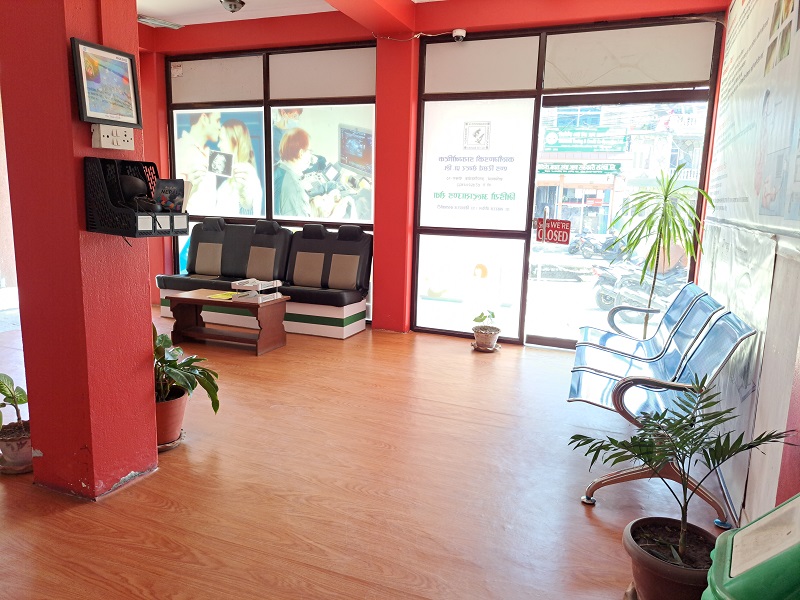
KDRC is at Shantipath, Amarsingh Chowk, Pokhara-10, Kaski. Whether you searched “5D ultrasound near me” from Lakeside, Bagar, Prithvi Chowk, Lekhnath or elsewhere in Kaski, call 061-553538 or 9856077433, or book your 5D ultrasound online. See our contact page for directions, browse all ultrasound services in Pokhara, or read about the types of ultrasound scan.
- same scan, standard rendering
- routine pregnancy scans
- all ultrasound services
- detailed organ check at 18–22 weeks
- blood-flow checks in pregnancy
How to prepare
- Bring your doctor’s request, antenatal card and previous scan reports.
- No fasting is needed; eat and drink normally.
- Wear a two-piece outfit for easy access to your tummy.
- Empty your bladder before the scan unless our staff ask otherwise.
- Best booked at about 26–30 weeks for the most lifelike images.
- Call 061-553538 or 9856077433 to confirm timing and price.
How long it takes
The 5D part of the scan is usually kept to a short, focused few minutes, and the whole visit including the medical 2D scan typically takes around 20–40 minutes, depending on the baby’s position.
Price in Pokhara
The cost of 5D ultrasound in Pokhara depends on which pregnancy scan it is added to, twin pregnancy and any extra studies your doctor requests. Call 061-553538 or 9856077433 for the current price.
What to expect at KDRC
When you arrive at KDRC on Shantipath, Amarsingh Chowk, give your doctor’s request, antenatal card and any previous scan reports to reception. You will be called into the ultrasound room, asked to lie on the couch and to uncover your tummy, and warm gel will be applied.
The sonologist first performs the medical part of the scan on standard 2D images: the baby’s position, heartbeat, growth measurements, placenta and fluid, depending on what your doctor requested. When the baby is lying in a good position, the sonologist switches to volume mode and sweeps over the face. The AI-assisted rendering then turns that volume into a lifelike 5D image on the screen while you watch, and the light can be moved to show the face at its best.
If the baby is facing away or has hands across the face, you may be asked to walk for a few minutes, turn on your side or empty your bladder, and the sonologist will try again. The 5D part is kept short and focused. After the scan, the radiologist reviews the medical images and our team tells you when to collect your report.
Frequently asked questions
Where can I get a 5D ultrasound in Pokhara?
You can get a 5D ultrasound in Pokhara at Kaligandaki Diagnostic and Research Center (KDRC), Shantipath, Amarsingh Chowk, Pokhara-10. We create 5D images with AI-assisted rendering on our HD 3D/4D ultrasound system, added to a medically indicated pregnancy scan and reported by consultant radiologists. Call 061-553538 or 9856077433 to book.
What is 5D ultrasound in simple words?
5D ultrasound is a 3D or 4D baby scan shown with realistic lighting, skin-like colours and depth, so your baby’s face looks closer to a photograph. The extra realism comes from AI-assisted rendering software, not from a different kind of sound wave or a new type of scan.
Is 5D ultrasound real or just marketing?
Both. The lifelike images are real and look clearly different from standard 3D/4D pictures, but the name “5D” is a marketing term. There is no fifth physical dimension: 5D means 3D space plus time, rendered with advanced lighting and colour. That is why KDRC describes it honestly as AI-assisted 5D rendering.
Does KDRC use a special 5D machine?
No. KDRC does not use a separately branded 5D machine. Our 5D images are produced with AI-assisted rendering applied to volume data from our HD ultrasound system with 3D, 4D and volume scanning. The realistic look depends on the rendering software, good timing and the sonologist’s skill rather than a machine label.
What is the difference between 4D and 5D ultrasound?
4D ultrasound shows a moving 3D image of your baby with standard, usually golden, shading. 5D uses the same scan and the same sound waves but renders the image with AI-assisted realistic lighting and skin tones. If you mainly want to watch movement, 4D is enough; for natural-looking portraits, choose 5D.
5D ultrasound kati hapta ma garne? (Best week?)
The best time for a 5D ultrasound is usually around 26–30 weeks of pregnancy, when the baby’s cheeks have filled out and there is still enough fluid in front of the face. Good pictures are often possible from about 24 to 32 weeks. Our team can suggest the right week when you call to book.
Is 5D ultrasound safe for my baby?
Yes, when done by trained staff for a sensible time. 5D uses ordinary ultrasound sound waves with no ionising radiation; the AI rendering happens on the computer, not in your body. Following the ALARA principle, KDRC adds 5D views to a medically indicated scan and keeps the 3D/4D/5D part short.
Does a 5D scan replace the anomaly scan?
No. A 5D scan shows your baby’s face and surface, while the anomaly scan at 18–22 weeks systematically checks the brain, heart, spine, kidneys and other organs. Keep your anomaly scan and the scans your doctor requests; 5D views can be added when the baby’s position allows.
Can 5D ultrasound detect problems with my baby?
5D is not designed to detect problems. It can make some surface features, such as the lip or fingers, easier to visualise, but internal organs, growth and blood flow are assessed on standard 2D images, the anomaly scan and Doppler studies. Any concern is reviewed by our consultant radiologists on the medical images.
Will a 5D scan show whether my baby is a boy or a girl?
No. KDRC does not determine or disclose the baby’s sex on any scan, including 5D ultrasound. Identifying fetal sex with intent to abort and sex-selective abortion are criminal offences under Section 188 of Nepal’s Muluki Criminal Code 2074. The 5D session focuses on your baby’s face, expressions and movements.
Why couldn’t we get a clear 5D picture of my baby’s face?
A clear 5D face needs fluid in front of the face and a baby facing the probe. A face-down position, hands or cord across the face, an anterior placenta, low fluid, late pregnancy, twins or a thicker abdominal wall can all block the view. This is common and not a sign of a problem.
What is the price of 5D ultrasound in Pokhara?
The price of 5D ultrasound at KDRC is quoted individually because it depends on which pregnancy scan it is added to, twin pregnancy and any extra studies your doctor requests. We do not publish fixed prices online. Call 061-553538 or 9856077433 for the current price and the best week to book.
Do I need to fast or have a full bladder for a 5D ultrasound?
No fasting is needed for a 5D ultrasound, and in later pregnancy a full bladder is usually not required. Eat and drink normally; a light snack beforehand may help your baby be active. Empty your bladder before the scan unless our staff ask otherwise, and wear clothes that give easy access to your tummy.
Can I have a 5D ultrasound with twins?
Yes, 5D views can be attempted in a twin pregnancy, but clear faces of both babies are harder to capture because the babies often lie against each other or the womb wall. The medical checks for each twin always come first, and our team will explain what can realistically be shown on the day.
Can the AI change how my baby really looks?
The AI-assisted rendering only works with what the scan captured. It lights, colours and smooths the surface but does not invent features or predict your baby’s appearance after birth. Images are a realistic interpretation of the scan, which is why a blurred or covered face cannot be fixed by software.
Sources
- nhs.uk/pregnancy/your-pregnancy-care/ultrasound-scans/
- nhs.uk/pregnancy/your-pregnancy-care/20-week-scan/
- fda.gov/radiation-emitting-products/medical-imaging/ultrasound-imaging
- aium.org/resources/official-statements/view/prudent-use-and-safety-of-diagnostic
- radiologyinfo.org/en/info/obstetricus
- medlineplus.gov/ency/article/003778.htm
This page is general health information reviewed by our radiologists. It is not a diagnosis — always follow your own doctor's advice. In an emergency, call our 24-hour ambulance or go to the nearest emergency department.
Shantipath, Amarsingh Chowk, Pokhara-10, Kaski · 061553538 / 9856077433
Related services in Pokhara
High Definition Ultrasound
Ultrasound (USG, sonography) in Pokhara at KDRC is a painless, radiation-free scan that uses high-frequency sound waves …
Anomaly Scan (TIFFA / Level II Ultrasound)
An anomaly scan in Pokhara at KDRC — also called a TIFFA scan (Targeted Imaging For Fetal Anomalies) or Level II ultraso…
Fetal Ultrasound (Pregnancy Scan)
A fetal ultrasound in Pokhara at KDRC is a radiation-free pregnancy scan that uses sound waves to check your baby, place…
4D Ultrasound (3D/4D Baby Scan)
4D ultrasound in Pokhara at KDRC is a pregnancy scan that shows a live, three-dimensional image of your baby’s face and …
Doppler Ultrasound
A Doppler test in Pokhara at KDRC is a colour Doppler ultrasound scan that measures the speed and direction of blood flo…