Minor Procedures7 min read
Thyroid Nodule on Ultrasound: What Happens Next?
After a thyroid nodule is seen on ultrasound, the radiologist scores its features, often with TI-RADS. Depending on that score and the nodule's size, your doctor advises no action, a follow-up scan, or fine needle aspiration cytology (FNAC) to check its cells. Over 90% of thyroid nodules are benign.
Also called: thyroid nodule next steps, TI-RADS explained, thyroid nodule FNAC, what does TI-RADS 3 mean, thyroid lump on ultrasound
Booking, timings and preparation: see our FNAC page.
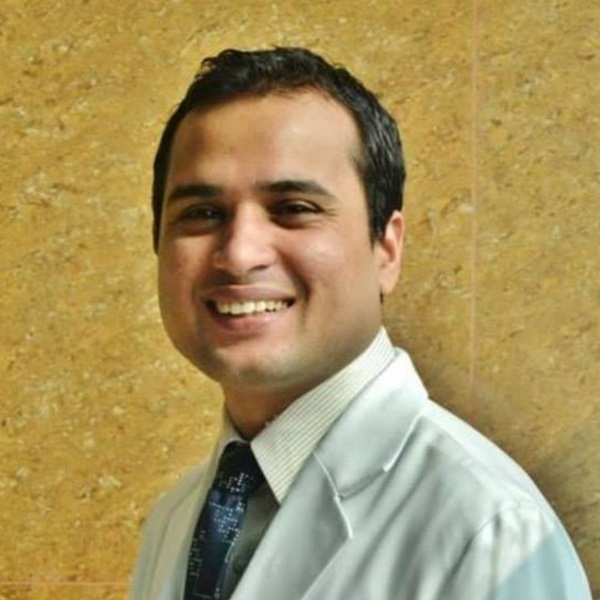 By Dr. Bishworaj Bastakoti · Consultant RadiologistReviewed by Dr. Nawaraj Paudel· Last reviewed 12 October 2026· Published 22 November 2026
Key takeaways
- Thyroid nodules are very common, and over 90% are benign.
- Ultrasound features are scored with TI-RADS, from TR1 (benign) to TR5 (highly suspicious).
- The TI-RADS category and nodule size together decide between FNAC, a follow-up scan or no action.
- Thyroid FNAC results use the six Bethesda categories; most are benign.
- Rapid growth, lasting hoarseness or difficulty swallowing or breathing need prompt medical review.
A thyroid nodule on ultrasound: what happens next?
If an ultrasound shows a thyroid nodule, the next step depends on how the nodule looks and how big it is. Most nodules are harmless. The radiologist gives it a risk score, often using a system called TI-RADS, and your doctor then chooses between no further action, a follow-up scan in months to years, or a fine needle aspiration cytology (FNAC) test to sample its cells. A thyroid blood test (TSH) is usually checked as well.
Thyroid nodules are lumps within the thyroid gland, the butterfly-shaped gland at the front of the neck. Many are found by chance during a scan done for something else. According to the American Thyroid Association, about half of all people have a thyroid nodule by the age of 60, and over 90% of nodules are benign. Finding one is common; the purpose of the next steps is to pick out the small number that need a closer look.
At Kaligandaki Diagnostic and Research Center (KDRC), consultant radiologists perform thyroid ultrasound and, when advised, ultrasound-guided sampling through our FNAC test in Pokhara, often in the same visit. This guide explains, in plain language, what the report means and what usually comes next.
What the radiologist looks at on a thyroid ultrasound
Ultrasound is the best imaging test for thyroid nodules. It uses sound waves, involves no radiation, and shows the size and internal structure of each nodule, as RadiologyInfo.org explains. The radiologist describes a few key features, because together they predict whether a nodule is likely to be benign.
The five features in plain terms
- Composition: is it filled with fluid (cystic), solid, or a mixture? Purely cystic and "spongiform" nodules are almost always benign.
- Echogenicity: how bright or dark the nodule looks compared with normal thyroid tissue. Very dark (markedly hypoechoic) solid nodules carry more concern.
- Shape: a nodule that is "taller than wide" on a cross-section view is a warning feature.
- Margin: smooth edges are reassuring; irregular edges or spread beyond the gland are not.
- Echogenic foci: tiny bright dots called microcalcifications raise suspicion, while large "comet-tail" artefacts are usually benign.
Size and number
The report also measures each nodule in millimetres or centimetres and notes how many there are. Having several nodules (a multinodular goitre) does not by itself mean a higher cancer risk; each nodule is judged on its own features. The lymph nodes in the neck are usually checked too.
TI-RADS explained simply
TI-RADS (Thyroid Imaging Reporting and Data System) turns those features into a score. The version most widely used, from the American College of Radiology, adds points for each worrying feature and places the nodule in one of five categories, from TR1 (benign) to TR5 (highly suspicious). The category, combined with the size, guides whether FNAC or a follow-up scan is advised.
| Category | What it means | Usual next step (ACR TI-RADS) |
|---|---|---|
| TR1 | Benign appearance | No FNAC needed |
| TR2 | Not suspicious | No FNAC needed |
| TR3 | Mildly suspicious | FNAC if 2.5 cm or more; follow-up scan if 1.5 cm or more |
| TR4 | Moderately suspicious | FNAC if 1.5 cm or more; follow-up scan if 1 cm or more |
| TR5 | Highly suspicious | FNAC if 1 cm or more; follow-up scan if 0.5 cm or more |
Some reports use other systems, such as the European EU-TIRADS or the American Thyroid Association's pattern categories. They work in a similar way. Your doctor may also recommend FNAC outside these thresholds, for example if there are enlarged neck lymph nodes, a history of radiation to the neck, or a strong family history of thyroid cancer.
When is FNAC advised for a thyroid nodule?
FNAC is the standard test for finding out what a suspicious nodule is made of. A very thin needle draws cells from the nodule, which a pathologist examines under a microscope. It is quick, done under local numbing or none, and usually needs no fasting. Our guide what is an FNAC test covers preparation, pain and accuracy in detail.
Ultrasound guidance lets the radiologist watch the needle tip enter the exact part of the nodule, which improves the quality of the sample, especially for small, deep or partly cystic nodules. The MedlinePlus page on thyroid fine needle aspiration describes a brief sting and pressure rather than real pain. Read about the procedure in ultrasound-guided biopsy.
Understanding your FNAC result
Thyroid FNAC reports usually use the Bethesda system, which has six categories. The American Thyroid Association's FNA guide notes that a benign result is obtained in up to 80% of biopsies, and that the chance of missing a cancer after a benign result is generally less than 3%.
- Bethesda I, non-diagnostic: not enough cells; the FNAC is usually repeated after a few weeks.
- Bethesda II, benign: the most common result; usually managed with follow-up ultrasound.
- Bethesda III and IV, indeterminate: the cells cannot be classed confidently; options include repeat FNAC, molecular testing or surgery to remove part of the gland.
- Bethesda V, suspicious for malignancy: surgery is usually discussed with a specialist.
- Bethesda VI, malignant: most often papillary thyroid cancer, which generally has a very good outlook with treatment.
| Category | Meaning | Usual next step |
|---|---|---|
| I | Non-diagnostic sample | Repeat FNAC |
| II | Benign | Follow-up ultrasound |
| III–IV | Indeterminate | Repeat FNAC, molecular test or surgery |
| V | Suspicious for malignancy | Specialist and surgical opinion |
| VI | Malignant | Treatment planning with a specialist |
FNAC and a tissue biopsy are different tests; see FNAC vs biopsy for when a larger sample is needed, and how to read a pathology report for general advice on results.
Blood tests and other checks
Your doctor will usually check thyroid-stimulating hormone (TSH). If TSH is low, the nodule may be producing excess hormone (a "hot" nodule). Hot nodules are rarely cancerous, and a thyroid scan may be arranged instead of FNAC. Most people with a nodule have normal thyroid function. MedlinePlus notes that most nodules cause no symptoms, though a large one can cause neck pressure or difficulty swallowing.
See a doctor promptly if a nodule grows quickly, your voice becomes hoarse for more than a few weeks, or you have trouble swallowing. Seek urgent care for any difficulty breathing or noisy breathing.
Follow-up when FNAC is not needed
If the nodule looks benign or is below the size threshold, your doctor will usually recommend no action or repeat ultrasound at set intervals, often between one and five years depending on the TI-RADS category. Keep every report and bring it to future scans: comparing size and appearance over time is one of the most useful things a radiologist can do. A nodule that stays stable for several years is very reassuring.
Some nodules change on their own. Fluid-filled cysts can shrink or even disappear, and a cyst that refills and causes pressure can sometimes be drained with a needle. Benign solid nodules may grow slowly over many years without becoming dangerous. A change in size alone is not a reason to panic; your doctor looks at how much it has grown and whether its features have changed before deciding whether a repeat FNAC is worthwhile.
- What is the TI-RADS category and size of my nodule?
- Do I need FNAC now, or a follow-up scan?
- When should the next ultrasound be done?
- Is my TSH blood test normal?
- Are the neck lymph nodes normal?
- Which symptoms should make me come back sooner?
- Should I keep this report for comparison?
Thyroid scans at KDRC are performed on HD ultrasound and reported by consultant radiologists Dr. Bishworaj Bastakoti and Dr. Nawaraj Paudel; you can read more on our doctors page. For a repeat scan, see our thyroid and neck ultrasound service, and to arrange ultrasound-guided thyroid FNAC, call 061-553538 or book an appointment online.
Example
Illustrative example (fictional): Maya, a 45-year-old shopkeeper, had an abdominal ultrasound for tummy pain. Her doctor also felt a small swelling in her neck and requested a thyroid ultrasound. The radiologist found a 1.8 cm solid nodule that was slightly darker than normal thyroid tissue, with smooth edges and no calcifications, and scored it TR4. Her TSH blood test was normal.
Because a TR4 nodule of 1.5 cm or more reaches the FNAC threshold, the radiologist performed ultrasound-guided FNAC in the same visit. It took about fifteen minutes and felt like a brief pinch and pressure. A few working days later the cytology report came back as Bethesda II, benign. Her doctor advised a repeat thyroid ultrasound in a year or two to confirm the nodule was stable, and told her to return sooner if it grew quickly, her voice changed or swallowing became difficult. Maya kept both reports in a folder for her next scan. This example is illustrative only; your doctor will decide your own plan.
Frequently asked questions
Should I worry about a thyroid nodule found on ultrasound?
Most thyroid nodules are harmless; over 90% are benign. The ultrasound features and size decide whether you need FNAC, a follow-up scan or no further action.
What does TI-RADS mean on my report?
TI-RADS is a scoring system that grades a thyroid nodule from TR1 (benign) to TR5 (highly suspicious) based on its ultrasound features. The score and size guide whether sampling is needed.
Does every thyroid nodule need FNAC?
No. Benign-looking and small nodules usually need only follow-up or nothing at all. FNAC is advised when the TI-RADS category and size reach set thresholds, or when other risk factors are present.
Is thyroid FNAC painful?
Most people feel a brief sting and some pressure rather than real pain. It is quick, usually needs no fasting, and you can go home soon afterwards.
How long do thyroid FNAC results take?
The sample is examined by a pathologist, and the report usually follows within a few working days. Take it to the doctor who referred you.
What happens if my FNAC result is indeterminate?
An indeterminate result (Bethesda III or IV) means the cells could not be classed confidently. Your doctor may suggest a repeat FNAC, further testing or a specialist opinion about surgery.
How often should a benign thyroid nodule be rechecked?
Follow-up intervals vary with the nodule's appearance, often between one and five years. Your doctor sets the schedule, and you should return sooner if the lump grows or causes symptoms.
Related tests at KDRC Pokhara
- FNACAn FNAC test in Pokhara at KDRC is fine needle aspiration cytology: a very thin needle draws cells from a lump, often under ultrasound guidance, for a pathologist to examine.
- High Definition UltrasoundUltrasound (USG, sonography) in Pokhara at KDRC is a painless, radiation-free scan that uses high-frequency sound waves to show live images of organs, blood vessels and soft tissues.
Questions or bookings: call +977-61553538 or +977-9856077433.
Go deeper
- FNAC at KDRC
- What is an FNAC test?
- FNAC vs biopsy
- Ultrasound-guided biopsy
- Ultrasound scans at KDRC
- Urinary Catheter Care at Home: A Daily Guide for Patients and CarersHow to look after a urinary catheter at home: daily hygiene, emptying and changing drainage bags, fluids, preventing blockages and the warning signs that need a doctor.
- When Is a Urinary Catheter Needed? Reasons, Types and AlternativesA urinary catheter is needed when the bladder cannot empty, urine output must be measured, or around surgery and childbirth. Learn the reasons, types, alternatives and warning signs.
- Biopsy Results: How Long They Take and How to Read Your ReportBiopsy results are never instant: the tissue is processed and studied by a pathologist before a histopathology report is issued. Most biopsy results are benign.
Sources
- www.thyroid.org/thyroid-nodules/
- www.thyroid.org/fna-thyroid-nodules/
- www.acr.org/Clinical-Resources/Clinical-Tools-and-Reference/Reporting-
- www.radiologyinfo.org/en/info/us-thyroid
- medlineplus.gov/ency/article/007265.htm
- medlineplus.gov/ency/article/003899.htm
This article is general information, not medical advice. Always consult your doctor about your specific situation.
About the author
Dr. Bishworaj BastakotiConsultant Radiologist
Consultant Radiologist at KDRC, Pokhara. Residency at the National Kidney and Transplant Institute, Manila; previously at Western Regional Hospital. Member, Nepal Radiologist Society.
View doctor's profile →
Expert reviewer
Dr. Nawaraj PaudelConsultant Radiologist
Consultant Radiologist at KDRC, Pokhara. Residency at East Avenue Medical Centre, Manila; formerly Assistant Professor of Radiology at Universal College of Medical Sciences. Member, Nepal Radiologist Society.
View doctor's profile →