Bone Health9 min read
What Is a Bone Density (DEXA) Test and Who Needs One?
A bone density test, or DEXA scan, measures how much mineral your bones contain, usually at the lower spine and hip, using two very low-dose X-ray beams. It gives a T-score showing whether bones are normal, thinning (osteopenia) or osteoporotic. It takes about 10 to 15 minutes and you stay fully clothed.
Also called: bone density test Pokhara, DEXA scan Nepal, bone mineral density test, osteoporosis test Pokhara, BMD test cost Pokhara
Booking, timings and preparation: see our Bone Mineral Density (BMD) page.
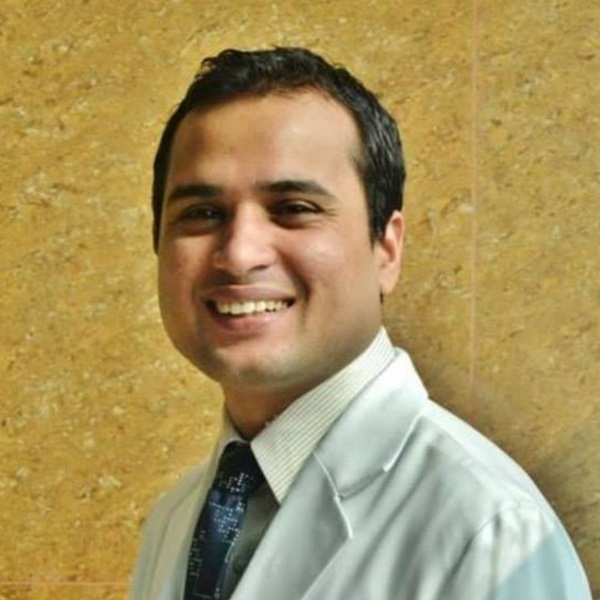 By Dr. Bishworaj Bastakoti · Consultant RadiologistReviewed by Dr. Nawaraj Paudel· Last reviewed 12 October 2026· Published 25 October 2026
Key takeaways
- A BMD test in Pokhara measures bone mineral density at the spine and hip to detect osteoporosis early.
- At KDRC the scan takes about 10–15 minutes, fully clothed, with no needles or enclosed space.
- No fasting is needed, but skip calcium supplements for 24 hours before the scan.
- A T-score of −2.5 or lower indicates osteoporosis; −1 to −2.5 is osteopenia.
- Doctors usually repeat the test every one to two years; call 061-553538 for current prices.
What is a bone density (BMD) test?
A bone density (BMD) test is a quick, painless bone density scan that measures how much mineral your bones contain, usually at the lower spine and hip. The result, called a T-score, tells your doctor whether your bones are normal, thinning (osteopenia) or already osteoporotic, often years before a fracture happens. At KDRC the scan takes about 10–15 minutes and you stay fully clothed.
BMD stands for bone mineral density. Most centres measure it with a DEXA (dual-energy X-ray absorptiometry) scanner, which passes two very low-dose X-ray beams through the bone and calculates its density. RadiologyInfo.org describes DEXA as the most widely used and most standardised way to diagnose osteoporosis and estimate fracture risk. Our BMD test in Pokhara page covers timings and booking.
Bones are living tissue. Throughout life they constantly break down and rebuild, but from about the mid-thirties the rebuilding slowly falls behind. For women after menopause the loss speeds up sharply because oestrogen, the hormone that protects bone, drops. Osteoporosis has no symptoms until a bone breaks, so a BMD scan is the only reliable way to see that silent loss early, while it can still be slowed with treatment, calcium, vitamin D and exercise.
Who needs a BMD test, and why?
Doctors order a BMD test for two reasons: to screen for osteoporosis before the first fracture, and to monitor treatment once osteoporosis has been diagnosed. It answers a simple question: how strong are your bones right now, and what is your risk of a fracture in the next few years? Most people discover osteoporosis only after they break a wrist, hip or spine bone in a minor fall, and a hip fracture in an older adult is a life-changing event.
- Women after menopause. In Nepal the typical patient is a woman in her fifties or sixties who has never had a scan. Early menopause raises the risk further.
- Adults over 65. Bone loss continues with age in both women and men, so screening becomes worthwhile even without symptoms.
- Anyone with a fracture after a minor fall. A broken bone from a trip or a fall from standing height is a warning sign of fragile bones.
- People on long-term steroids. Steroid tablets such as prednisolone, often used for arthritis or lung disease, weaken bone over months and years.
- People with certain conditions. Thyroid, kidney and malabsorption disorders, low body weight, smoking and a family history of hip fracture all increase risk.
- Men with risk factors. Men over 65, or those with low testosterone, heavy smoking or steroid use, also lose bone and benefit from screening.
Your doctor may also request a scan if you have lost height or developed a stoop. A diet low in milk and dairy and limited sun exposure matter locally too. If several of these apply to you, raise them with your doctor rather than waiting for symptoms. Our guide on osteoporosis screening in Nepal covers who should test and when.
How to prepare for a BMD test
Preparation for a bone density scan is minimal, which is one reason it is such an easy test to fit into a busy week. There are no needles, no dye and no fasting.
The day before and the morning of the scan
You can eat, drink and take your usual medicines. The one exception is calcium supplements: skip them for 24 hours before the scan, because a tablet sitting in the gut can affect the spine reading. Wear clothing without metal fasteners, such as a tracksuit or a kurta without zips, and leave belts and keys behind. Arrive a few minutes early so check-in feels relaxed.
What to tell the staff
Tell the team if you have recently had a barium meal or a CT scan with contrast, because the material can sit in the bowel and interfere with the spine measurement; the team may adjust or reschedule. Always mention if there is any chance you are pregnant.
| Before your scan | What to do | Why it matters |
|---|---|---|
| Food and drink | Eat and drink normally | No fasting is needed for a BMD test |
| Calcium supplements | Skip for 24 hours | Tablets in the gut can distort the reading |
| Clothing | Wear clothes without metal zips or buttons | Metal near the spine or hip affects the image |
| Recent barium or contrast | Tell the staff when booking | Leftover material can interfere with the spine reading |
| Possible pregnancy | Tell the staff before the scan | The scan may be postponed |
What affects the cost
BMD test cost depends on the centre and how many sites are scanned (spine, hip or both). KDRC keeps pricing affordable and transparent: call 061-553538 for the current price and the team will quote before you book, with no hidden charges. When comparing centres, also compare what you get: a clear printed report your doctor can act on, and previous results kept on file so next year's scan can be compared with this one.
T-score vs Z-score: reading your BMD result
Two numbers appear on a BMD report. The T-score compares your bone density with that of a healthy young adult and is used to diagnose osteopenia and osteoporosis in postmenopausal women and older men. The Z-score compares you with people of your own age, sex and size, and is mainly used for children, younger adults and premenopausal women, where a T-score can be misleading.
The diagnostic thresholds come from the World Health Organization and are used worldwide, as MedlinePlus explains. A T-score of −1 or higher is normal. Between −1 and −2.5 means low bone density, called osteopenia. At −2.5 or lower the result indicates osteoporosis. A Z-score well below the expected range for your age prompts your doctor to look for another cause of bone loss, such as a hormone or kidney problem.
| Category | T-score | What usually follows |
|---|---|---|
| Normal | −1.0 or higher | Healthy lifestyle; repeat only if risk changes |
| Osteopenia (low bone density) | Between −1.0 and −2.5 | Calcium, vitamin D, exercise; doctor reviews risk |
| Osteoporosis | −2.5 or lower | Medicines to slow bone loss plus lifestyle steps |
| Severe osteoporosis | −2.5 or lower with a fragility fracture | Treatment and fall prevention are a priority |
Your doctor never treats the number alone. They combine it with your age, past fractures, medicines and family history to estimate your overall fracture risk. To understand every line of the report, read what a bone density test tells you, with T-scores explained.
What happens during a BMD scan at KDRC
At KDRC Pokhara, on Shantipath at Amarsingh Chowk, the scan itself takes about 10–15 minutes, and most patients spend around thirty minutes at the centre including check-in. You lie still, fully clothed, on a padded table while a scanner arm passes slowly over your lower spine and hips. Nothing encloses you, there is no injection, and there is no loud noise or claustrophobia.
The radiographer helps you remove metal items such as belts, keys and zips from the waist area, then positions you on the table, sometimes with your legs resting on a padded block to flatten the lower back. You are asked to stay still while the machine takes its readings. Most patients describe the scan as completely uneventful. Afterwards you can go straight back to normal activities.
- 1Prepare at homeEat normally, skip calcium supplements for 24 hours and wear clothes without metal fasteners.
- 2Check inArrive a few minutes early with your prescription and any previous BMD reports.
- 3Remove metalTake off belts, keys and anything with zips around the waist and hips.
- 4Lie on the tableThe radiographer positions you on a padded table; nothing encloses you.
- 5Stay stillA scanner arm passes slowly over your lower spine and hip for about 10–15 minutes.
- 6Go homeReturn to normal activity straight away; the T-score report is prepared for your doctor.
The images are reviewed and a report with your T-scores is prepared for your doctor. KDRC keeps your previous reports on file, which makes year-to-year comparison straightforward. Because BMD sits alongside KDRC's 192-slice CT, HD ultrasound and lung function testing, your bone density check can be combined with other tests your doctor orders in a single visit.
Is a BMD scan safe, and how often should it be repeated?
A BMD scan is one of the safest imaging tests available. The radiation dose is a small fraction of a standard chest X-ray, among the lowest of any diagnostic imaging test, according to Cleveland Clinic. It is considered safe to repeat at the intervals your doctor recommends. The only routine precaution is pregnancy, which you should always mention beforehand.
Depending on your result and treatment, doctors usually repeat a BMD test every one to two years. People with normal bone density and few risk factors may safely wait longer, while people on osteoporosis treatment need periodic scans to confirm the medicines are working. The exact interval is your doctor's decision. Repeat scans are most meaningful when done on the same type of machine, so the comparison reflects your bones and not a change of equipment.
If your result shows osteopenia or osteoporosis, your doctor will usually discuss calcium and vitamin D, weight-bearing exercise, fall-proofing your home and, for osteoporosis, medicines that slow bone loss. The NHS notes that treatment aims to strengthen bones and prevent fractures. Detected early, osteoporosis is one of the most manageable long-term conditions, and fracture risk drops substantially with treatment.
Common mistakes and myths about bone density testing
- Myth: osteoporosis causes pain, so I would know. Bone loss is silent. The first sign is often a fracture, which is exactly what the scan aims to prevent.
- Myth: only women need a BMD test. Men also develop osteoporosis, especially after 65 or with long-term steroid use.
- Mistake: taking calcium tablets on the morning of the scan. Skip them for 24 hours so the spine reading is accurate.
- Mistake: forgetting to mention a recent barium or contrast study. Leftover material can distort the result and may mean a repeat visit.
- Myth: an osteoporosis result means nothing can be done. A scan result is a starting point for prevention, not a diagnosis of doom.
- Mistake: choosing a centre only on price. The cheapest scan is not a bargain if it cannot be compared with your next one.
Knowing your number is the first step. To book, call 061-553538 or 9856077433, visit our bone density scanning at KDRC, or contact KDRC; the team will confirm the small preparation details when you call.
- How to read every line of your bone density report
- Can be booked in the same visit; tell staff about recent contrast
- Another same-visit test your doctor may order
- Who in Nepal should be screened and when
- Often needed by patients on long-term steroids
Example
Illustrative example (fictional). Bimala, a 58-year-old teacher from Lakeside, reached menopause early and had taken steroid tablets for her asthma on and off for years. She felt perfectly well, but her doctor suggested a BMD test because of these risk factors.
Her son Prakash called 061-553538 to ask about preparation and the current price. The team told him she could eat normally but should skip her calcium tablet for 24 hours and wear clothes without metal zips. On the day, Bimala lay on the padded table for about fifteen minutes while the scanner arm passed over her spine and hip. She said it was easier than having her blood pressure checked.
Her report showed a T-score of −2.1 at the hip, which is osteopenia. Her doctor recommended calcium and vitamin D, daily walking and making the house safer against falls, and planned a repeat scan in two years. Because KDRC keeps her report on file, the next scan can be compared directly with this one.
Frequently asked questions
Is a bone density test painful?
No. A BMD test is completely painless. You lie still on a padded table for about 10–15 minutes while a scanner arm passes over your spine and hip, with no needles, injections or enclosed spaces.
How long does a BMD test take in Pokhara?
At KDRC the scan takes about 10–15 minutes, and most patients spend around thirty minutes at the centre including check-in. You can return to normal activity immediately afterwards.
Do I need to fast before a BMD test?
No fasting is needed. Eat and take your usual medicines, but skip calcium supplements for 24 hours before the scan and wear clothes without metal fasteners.
Does a BMD test use a lot of radiation?
No. The dose is a small fraction of a standard chest X-ray, among the lowest of any imaging test, and it is considered safe to repeat at the intervals your doctor recommends.
What is a normal BMD T-score?
A T-score of −1 or higher is normal. Between −1 and −2.5 indicates osteopenia, and −2.5 or lower indicates osteoporosis. Your doctor interprets it with your overall fracture risk.
How much does a BMD test cost in Pokhara?
The cost depends on how many sites are scanned, such as the spine, hip or both. Call KDRC on 061-553538 for the current price; the team quotes before you book with no hidden charges.
Related tests at KDRC Pokhara
- Bone Mineral Density (BMD)A BMD test in Pokhara at KDRC is a quick, painless, very low-dose X-ray scan that measures the mineral content of your bones.
- 192 Slice High Resolution CT ScanA CT scan in Pokhara at KDRC is a fast, painless X-ray test that uses a computer to create detailed cross-sectional images of the head, chest, abdomen, spine, bones and blood vessels.
- High Definition UltrasoundUltrasound (USG, sonography) in Pokhara at KDRC is a painless, radiation-free scan that uses high-frequency sound waves to show live images of organs, blood vessels and soft tissues.
- Pulmonary Function Test (PFT)A PFT test in Pokhara at KDRC is a set of painless breathing tests, led by spirometry, that measure how much air your lungs hold and how fast you can blow it out.
Questions or bookings: call +977-61553538 or +977-9856077433.
Go deeper
Sources
- www.radiologyinfo.org/en/info/dexa
- medlineplus.gov/ency/article/007197.htm
- my.clevelandclinic.org/health/diagnostics/10683-dexa-dxa-scan-bone-den
- www.nhs.uk/conditions/osteoporosis/
This article is general information, not medical advice. Always consult your doctor about your specific situation.
About the author
Dr. Bishworaj BastakotiConsultant Radiologist
Consultant Radiologist at KDRC, Pokhara. Residency at the National Kidney and Transplant Institute, Manila; previously at Western Regional Hospital. Member, Nepal Radiologist Society.
View doctor's profile →
Expert reviewer
Dr. Nawaraj PaudelConsultant Radiologist
Consultant Radiologist at KDRC, Pokhara. Residency at East Avenue Medical Centre, Manila; formerly Assistant Professor of Radiology at Universal College of Medical Sciences. Member, Nepal Radiologist Society.
View doctor's profile →