
Patient Guides & Support7 min read
MRI for Children: A Parent's Guide to Medical Scans in Pokhara
MRI for children is a painless, radiation-free scan that uses a magnetic field and radio waves to picture the brain, spine, joints and soft tissues. At KDRC the open MRI is open on all sides, so a parent can stay close, and many children complete the scan without sedation after simple preparation at home.
Also called: children's MRI Pokhara, paediatric MRI Nepal, child MRI scan, MRI scan for kids, pediatric scan Pokhara
Booking, timings and preparation: see our Open Type MRI page.
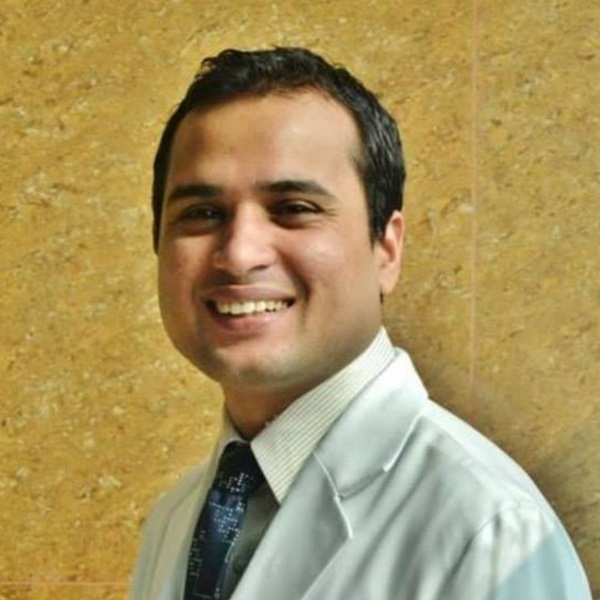 By Dr. Bishworaj Bastakoti · Consultant RadiologistReviewed by Dr. Nawaraj Paudel· Last reviewed 12 October 2026· Published 12 November 2026
Key takeaways
- MRI for children uses magnets and radio waves, so there is no ionising radiation.
- KDRC's open MRI is open on all sides, so a parent can stay close during the scan.
- Age-matched explanations and a home statue game help children lie still.
- Sedation is considered only when calming fails, and it is always the doctor's decision.
- Every child and accompanying parent must pass metal screening before entering the scan room.
Is MRI for children safe?
Yes. MRI for children is safe because it uses a magnetic field and radio waves, not ionising radiation, and the scan is painless. Nothing touches the child, and there is no cumulative radiation risk, which is why doctors readily choose MRI for children and for anyone who needs repeated follow-up imaging. The main safety rules are about metal, so honest answers during screening keep every child safe.
When a doctor says a child needs an MRI, parents often hear little after that word. Will she be scared? Will he have to lie still? Is it safe? RadiologyInfo.org's pediatric MRI guide explains that MRI gives detailed pictures of the brain, spine, joints and soft tissues without X-rays. The machine does make loud knocking sounds during each sequence. They are harmless but surprising, so it is worth rehearsing them at home.
This guide answers those questions for families in Pokhara: how MRI for children works, how KDRC's open MRI makes it easier, how to prepare a child of any age, and when sedation is considered. Scan timings and general preparation are on our MRI in Pokhara page.
Why do doctors order an MRI for a child?
Doctors request MRI in children for the same reasons as in adults: when ultrasound or a clinical examination cannot answer the question and the added detail would change treatment. Understanding what the scan can show makes the preparation feel worthwhile rather than merely brave.
- Brain and nerves. Epilepsy (often alongside an EEG for epilepsy), unexplained or worsening headaches, developmental concerns and follow-up of known brain conditions.
- Spine. Back pain with warning signs, weakness or numbness, and congenital spine conditions.
- Joints and sports injuries. Knee, ankle and shoulder injuries where ligaments, cartilage or growth plates need a clear view.
- Soft tissues and lumps. Swellings that ultrasound has found but cannot fully characterise.
- Pelvis and abdomen. Selected problems in the pelvic organs and abdomen, often after an initial ultrasound.
Some studies need an injection of contrast agent, a different dye from the one used in CT, to show inflammation or blood supply more clearly. If so, the team will explain this and ask about kidney problems and allergies beforehand.
The MRI magnet is always on. Before the scan, tell staff if your child (or you, if you will stay in the room) has a pacemaker, cochlear implant, programmable shunt, metal clips, braces, retained metal fragments or a medicine patch. Remove hair clips, jewellery, watches, coins and phones. Most implants do not stop a scan, but each needs individual assessment first.
How to prepare your child for an MRI by age
Match the explanation to the age. Children cope best when they know what to expect, and a pretend game at home helps every age group. Practise the "statue game" for a few minutes daily in the week before the scan; holding still as play genuinely transfers to the scanner table.
Toddlers and preschoolers
Keep it to three ideas: the camera takes pictures of your tummy (or head) while you lie still like a statue, it is noisy like a drum, and holding still is the game. Bring the comfort item everywhere, from the car to the scanner room.
School-age children
Add honesty about duration, the knocking noise and pauses. Radiographers can break scans into blocks, so rest breaks feel predictable rather than endless. Children who have rehearsed stillness as play rarely need it explained twice.
Teenagers
Involve them in the why. Showing the referral letter and answering questions directly turns resistance into cooperation. Teenagers deserve the facts, including what the doctor hopes to learn.
| Age group | How to explain it | Best practice tip |
|---|---|---|
| Toddlers and preschoolers | Camera, drum noise, statue game | Bring a favourite toy or blanket |
| School-age children | Honest about noise, stillness and breaks | Practise the statue game daily |
| Teenagers | Explain why the scan was ordered | Let them ask the radiographer questions |
| Young infants | No explanation needed | Ask whether feed-and-wrap during natural sleep is possible |
Children take their emotional cues from adults, so the single most powerful preparation is your own relaxed rehearsal of the visit. Talk about it days ahead, in daylight and playfully, rather than the night before.
Open MRI vs tunnel MRI for children
An open MRI is open on all sides rather than a narrow tube, so the child can see the room, and a parent can stay close by throughout the scan, often holding a hand. KDRC's open MRI works this way. Less enclosure means less fear, fewer movement problems and, for many children, no need for sedation at all.
In a conventional tunnel MRI, a child sees a ceiling centimetres from their face and hears rhythmic knocking, and many clamp up within minutes. An open magnet changes the psychology completely: the child sees the room, sees you, and experiences the scan as something watched rather than endured. Movement is the great enemy of MRI quality, and calm children hold still.
| Factor | Open MRI | Tunnel MRI |
|---|---|---|
| Design | Open on all sides | Narrow tube around the body |
| What the child sees | The room and the parent | A ceiling close to the face |
| Parent contact | Can often hold a hand | Usually limited |
| Fear and movement | Less enclosure, calmer children | More likely to feel trapped |
| Need for sedation | Often avoided | More often considered |
For a fuller comparison, read open MRI vs closed MRI, and for an overview of scanning in the city see our guide to what an MRI scan is.
Scan day at KDRC: what to bring and how parents can help
Bring your child's prescription and previous reports, identity documents, a favourite toy, blanket or comfort item, a snack and drink for after the scan, and clothes without metal zips or buttons. Arrive early so nothing feels rushed. Metal-free clothing saves time at screening, and a familiar soft toy can ride along until the moment imaging starts. The full packing advice in what to bring to an imaging appointment applies to children and adults alike.
- Doctor's prescription or referral letter
- Previous scan reports and films
- Identity documents
- A favourite toy, blanket or comfort item
- A snack and drink for after the scan
- Clothes without metal zips, buttons or poppers
- Fasting instructions, if sedation is planned
- Quiet activities for siblings who come along
With an open MRI, a parent usually stays in the room, within reach or sight of the child, after passing the same metal screening as the patient. You will be told what to remove and where to stand or sit. Stay calm, because children read your face faster than any instruction. Hold their hand where the radiographer allows and speak in a slow, soothing voice between sequences. Ear protection is normally provided because of the noise, as the NHS describes.
Accept the radiographer's lead. KDRC's staff scan children regularly and have routines for fear, from touring the room first to pausing between sequences. How long a scan takes depends on the body part and the number of sequences, and movement lengthens any scan, so ask when you book how long your child's particular study usually takes.
When is sedation considered for a child's MRI?
Sedation is considered only when a child cannot hold still long enough for diagnostic-quality images and calming strategies have not worked. It is always the doctor's decision after weighing benefit and risk, never a convenience. Many children complete an open MRI scan without sedation because a parent stays nearby.
The referring doctor and radiologist assess the child's age, health and the importance of the scan, and whether simpler calming could work. If sedation is advised, the team gives fasting and arrival instructions in advance and a monitoring plan, and the child recovers under observation before going home the same day. RadiologyInfo.org's pediatric sedation page explains why fasting rules matter and how children are monitored.
For young infants there is a gentler option than sedation: the feed-and-wrap approach, in which a fed, swaddled, sleepy baby is scanned during natural sleep. The team will tell you if your baby's scan can be organised this way. Whatever the plan, the metal screening described on RadiologyInfo.org's MRI safety page applies to every child and accompanying parent.
Common mistakes and myths about children's MRI scans
- Myth: MRI exposes children to radiation. MRI uses magnets and radio waves. Radiation exposure is not a concern with this scan.
- Mistake: surprising the child on the day. Children who know about the noise and the statue game cope far better than those who are told nothing.
- Mistake: forgetting to mention implants or metal. Pacemakers, certain implants, braces and retained metal fragments need assessment before any scan.
- Myth: every child needs sedation for an MRI. Many children complete an open MRI calmly with a parent close by.
- Mistake: dressing the child in clothes with zips and buttons. Metal-free clothing saves time and stress at screening.
- Mistake: showing your own anxiety. Your calm voice and face are the best tools in the room.
Families preparing for a first visit can also read our guide to choosing a diagnostic center in Pokhara. To ask about a child's scan, read about KDRC's open MRI scanner or call 061-553538.
- The scanner that lets a parent stay close
- Often paired with brain MRI in epilepsy work-up
- Why the open design helps anxious patients
- Radiation-free first test for many children's problems
- Faster test used in emergencies such as head injury
Example
Illustrative example (fictional). Aarav, a six-year-old from Bagar, had been having short staring spells at school. His paediatrician ordered a brain MRI and an EEG. His mother Sita worried that he would never lie still inside a machine.
For a week before the scan, Sita and Aarav played the statue game every evening, and she played him a recording of knocking sounds so the noise would not surprise him. She called 061-553538 to ask how long his scan would take and what to bring, packed his favourite stuffed tiger and dressed him in a tracksuit without zips.
At the centre, the radiographer showed Aarav the open scanner first. Sita passed the metal screening and sat beside him, holding his foot, while he wore ear protection. When he wriggled, the radiographer paused and restarted the sequence. He finished without sedation, and the images went to his doctor along with the radiologist's written report on the findings.
Frequently asked questions
Can a parent stay in the MRI room with my child?
Yes. With KDRC's open MRI a parent usually stays in the room, within reach or sight of the child, after passing the same metal screening as the patient.
Does MRI use radiation for children?
No. MRI uses magnetic fields and radio waves, not the ionising radiation used in X-ray and CT, which is why doctors often prefer it when a child needs detailed or repeated imaging.
Will my child need sedation for an MRI?
Not usually with an open MRI. Sedation is considered only if a child cannot hold still and calming strategies have failed, and it is always the doctor's decision with fasting instructions given in advance.
How long does a child's MRI take?
It depends on the body part and the number of image sequences, and movement can lengthen any scan. Ask KDRC when you book how long your child's particular scan usually takes.
How do I explain an MRI scan to my child?
Match the words to the age: a camera that takes pictures, a noise like a drum, and a statue game for little ones; honest detail for older children and teenagers. Practising at home helps.
What if my child is scared on the day of the scan?
Tell the staff straight away. They scan children regularly and can tour the room first or pause between sequences. Nothing is forced on a frightened child.
Related tests at KDRC Pokhara
Questions or bookings: call +977-61553538 or +977-9856077433.
Go deeper
- Open MRI at KDRC
- MRI in Pokhara: open MRI explained
- Open MRI vs closed MRI
- What to bring to an imaging appointment
- How to choose a diagnostic center in Pokhara
- How to Read an MRI Report: T1, T2 and Common Terms ExplainedA plain-language guide to MRI reports: report sections, what T1, T2 and FLAIR mean, terms like hyperintense, and common spine and joint phrases.
- How to Read a CT Scan Report: Sections, Terms and Next StepsA plain-language guide to CT scan reports: the standard sections, what terms like hypodense and enhancement mean, and why to review results with your doctor.
Sources
- www.radiologyinfo.org/en/info/pediatric-mri
- www.radiologyinfo.org/en/info/pediatric-sedation
- www.radiologyinfo.org/en/info/safety-mr
- www.nhs.uk/tests-and-treatments/mri-scan/
This article is general information, not medical advice. Always consult your doctor about your specific situation.
About the author
Dr. Bishworaj BastakotiConsultant Radiologist
Consultant Radiologist at KDRC, Pokhara. Residency at the National Kidney and Transplant Institute, Manila; previously at Western Regional Hospital. Member, Nepal Radiologist Society.
View doctor's profile →
Expert reviewer
Dr. Nawaraj PaudelConsultant Radiologist
Consultant Radiologist at KDRC, Pokhara. Residency at East Avenue Medical Centre, Manila; formerly Assistant Professor of Radiology at Universal College of Medical Sciences. Member, Nepal Radiologist Society.
View doctor's profile →