
MRI7 min read
Open MRI vs Closed MRI: Benefits for Anxious Patients
Open MRI vs closed MRI comes down to the magnet's shape. A closed MRI slides you into a narrow tunnel, while an open MRI leaves you unenclosed. Both use magnets and radio waves with no X-ray radiation. For most routine spine, joint and brain questions, a modern open MRI answers the question with far less anxiety.
Also called: open MRI vs tunnel MRI, open MRI for claustrophobia, closed bore MRI, open MRI Pokhara, MRI without tunnel Nepal
Booking, timings and preparation: see our Open Type MRI page.
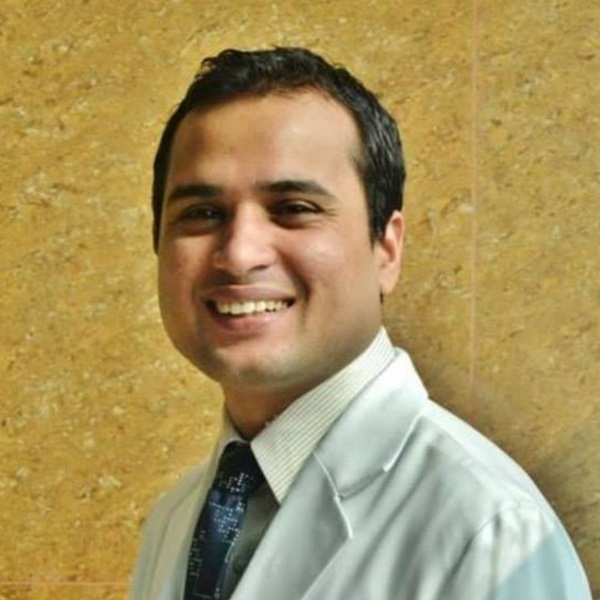 By Dr. Bishworaj Bastakoti · Consultant RadiologistReviewed by Dr. Nawaraj Paudel· Last reviewed 12 October 2026· Published 14 October 2026
Key takeaways
- Open MRI vs closed MRI differ in magnet shape; both use magnets and radio waves, with no X-ray radiation.
- A closed MRI is a narrow tunnel; KDRC's open-type MRI is open on all four sides.
- For routine spine, joint and brain studies, modern open MRI gives diagnostic-quality images.
- Most claustrophobic patients complete a scan on KDRC's open MRI without sedation.
- Safety screening for metal and implants is the same in both scanner types.
What is the difference between open MRI and closed MRI?
The difference between open MRI vs closed MRI is the shape of the magnet: a closed MRI slides you into a narrow tunnel, while an open MRI has no enclosing tube. KDRC's open-type MRI is open on all four sides, so you see the room around you, feel far less trapped and can often have family close by. For many patients, the scariest part of an MRI is not the diagnosis but the tunnel, and that is exactly what an open design removes.
Both types rely on the same technology. As RadiologyInfo.org and the US National Institute of Biomedical Imaging and Bioengineering explain, MRI uses a strong magnetic field, radio waves and a computer to produce detailed images, with no ionising radiation. The only difference is geometry: a cylinder that encloses you, or an open design that leaves you unenclosed.
That geometric difference changes the whole experience of the scan while still answering the same clinical questions for the great majority of referrals. This guide compares the two honestly: what each feels like, image quality, who benefits from which, and why KDRC Pokhara chose an open-type MRI. Timings and preparation are on our MRI in Pokhara page.
What a closed MRI feels like for patients
Closed MRI produces strong images because the magnet fully surrounds the body, but the experience is not easy for everyone. These are the things patients describe most often.
- Enclosure. Your whole body often lies inside the cylinder, with only a narrow view out. This is the sensation that triggers panic in some people.
- Noise. The machine makes loud knocking sounds for minutes at a time. Earplugs or headphones help but do not remove it.
- Stillness. Any movement blurs the images, so tense, uncomfortable patients are the most likely to need repeats.
- Body size. Larger patients can feel physically squeezed in a narrow bore.
- Distance from family. A parent or relative usually cannot stay within reach of the patient inside the tunnel.
For some people who are very still and comfortable in enclosed spaces, a closed scan is unremarkable. For others, it is the reason an ordered MRI stays unbooked for months. The NHS advises anyone anxious about an MRI or afraid of small spaces to talk to a healthcare professional before the appointment.
Image quality, scan time and comfort compared
Patients usually ask three practical questions: will the pictures be good enough, will it take longer, and will it feel better? The honest answers are below.
Is open MRI image quality as good?
For most routine questions, such as spine, joints, brain screening and follow-up, a modern open MRI gives diagnostic-quality images that answer the clinical question. Ultra-high-field research scanners keep an edge for tiny structures, but everyday diagnosis rarely needs that level. Image quality depends on the match between scanner and question, and a brain screening, knee ligament scan or lumbar spine study is well within a modern open machine's capability. Consultant radiologists at KDRC report every study, and if your question were better answered elsewhere, they would tell your referring doctor.
Does open MRI take longer?
Scan length depends far more on the body part and number of image series than on the scanner's shape. Open MRI scans at KDRC generally take a similar twenty-to-forty-five-minute window. Staying still matters more than speed for image quality in either machine, and relaxed patients stay still more easily.
| Question | Open MRI at KDRC | Closed tunnel MRI |
|---|---|---|
| Routine spine, joint, brain studies | Diagnostic-quality images | Diagnostic-quality images |
| Typical scan time | About 15 minutes to an hour, by body part | Similar; depends on body part and sequences |
| Feeling of enclosure | Open on all four sides | Narrow tunnel around the body |
| Noise level | Quieter operation | Loud knocking sounds |
What makes KDRC's open MRI different?
KDRC's machine is open on all four sides, not just at the ends, giving an unobstructed view of the room. It runs quieter than tunnel scanners, suits children and larger patients, and its tiltable table allows positioning for the clearest images, which helps with joints and with patients who cannot lie perfectly flat.
Who benefits most from an open MRI vs a closed MRI?
Claustrophobia is the clearest case. With the scanner open on all four sides, most claustrophobic patients at KDRC complete their scan without sedation, where a tunnel might have made the same scan impossible. Children are the second big group: a parent within reach, a machine that does not swallow the child and quieter operation often decide whether a scan is completed or abandoned.
Larger patients get dignified, comfortable scanning without the squeeze of a tube. Elderly patients, people with back pain who struggle to lie in one fixed position, and anyone who has delayed a scan out of fear also benefit. A closed scanner remains a reasonable option for relaxed patients, and your doctor will say if an extremely specialised high-field protocol is needed.
| Factor | Open MRI | Closed MRI |
|---|---|---|
| Claustrophobia | Usually manageable without sedation | May need sedation or be refused |
| Children | Parent can often stay within reach | Child is enclosed alone |
| Larger patients | No physical squeeze | Narrow bore can feel tight |
| Routine image quality | Diagnostic quality for most studies | Diagnostic quality for most studies |
| Specialised research protocols | Rarely needed for everyday diagnosis | Ultra-high-field units keep an edge |
How to have a calm, sedation-free open MRI at KDRC
Avoiding sedation matters. It removes the need for fasting, recovery time and an escort, and lets a child go home or to school the same day. Because the patient can see the room, a parent can stay within reach or even hold a hand, and the machine is quieter, many children and anxious adults complete an open MRI awake when a tunnel would have needed sedation. Each case is assessed individually.
- 1Share your historyTell the booking desk about past panic, claustrophobia or a scan you could not finish.
- 2Plan a companionAsk whether a family member can stay close; they will also need metal screening.
- 3Dress without metalWear clothes without zips or hooks and leave jewellery at home.
- 4Hear the planAsk the technologist how long each series lasts and how the squeeze ball works.
- 5Breathe slowlyKeep your eyes open, look at the room and breathe slowly through each series.
- 6Ask for a pausePress the squeeze ball if you need a break; staff can talk to you on the intercom.
Tell the booking desk your history honestly. "She panicked in a tunnel MRI last year" is useful clinical information that changes how the team prepares, not a mark against you. Where sedation is genuinely unavoidable, usually for very young children, it is planned in advance rather than improvised. Parents can read more in our guide to MRI for children.
Is open MRI as safe as closed MRI?
Yes. Safety is the same in both, because the magnetic field is what matters, not the shape of the machine. Neither type uses X-rays. RadiologyInfo.org's MRI safety guidance explains that the main risk comes from metal objects and certain implants, so every patient, and any companion who stays in the room, completes the same metal safety screening.
Tell staff about pacemakers, defibrillators, cochlear implants, metal fragments near the eyes, surgical implants or possible pregnancy before the scan. Most modern implants are MRI-compatible but must be checked first. Preparation is the same as any MRI: remove metal, wear clothes without zips or hooks and bring prior reports, as listed in what to bring to an imaging appointment. Our complete guide to MRI scans covers screening and what happens on the day.
Common myths about open and closed MRI
- Myth: open MRI is only for claustrophobic people. At KDRC the open-type MRI serves all patients; there is no separate open-versus-closed choice at the desk.
- Myth: open MRI images are always blurry. For routine spine, joint and brain studies, modern open MRI produces diagnostic-quality images.
- Myth: open MRI costs more. At KDRC the price follows the study, body part and contrast use, not the scanner design.
- Myth: insurance will not accept an open MRI. Insurance covers the MRI study your doctor refers, not the scanner style.
- Mistake: delaying a needed scan out of fear. An untreated problem is a bigger risk than a manageable half hour in an open scanner.
- Mistake: keeping past panic to yourself. Telling staff lets them support you properly.
For the money side, see why MRI is expensive, and if the question is which test you need at all, read CT versus MRI. To book, visit our open-type MRI at KDRC or contact KDRC at Shantipath, Amarsingh Chowk, Pokhara-10, on 061-553538 or +977-9856077433.
- KDRC's open-type MRI, open on all four sides
- Preparing a child for a calm scan
- Which scan answers your question
- Fast alternative for bleeding, bone and lungs
- Price follows the study, not the scanner
Example
Illustrative example (fictional). Ramesh, a 61-year-old retired soldier from Bagar, needed an MRI of his neck for arm tingling. Two years earlier he had tried a tunnel scanner elsewhere and pressed the alarm after a few minutes, feeling unable to breathe. Since then he had avoided rebooking, even as the tingling worsened.
His son Prakash called 061-553538 and explained what had happened. The desk said KDRC's MRI is open on all four sides and quieter than a tunnel, and that Prakash could often stay close after completing the same metal screening. They suggested Ramesh keep his eyes open, breathe slowly and use the squeeze ball if he needed a pause.
On the day, Ramesh lay on the table with a clear view of the room and his son nearby. He needed one short pause, then completed the study awake in about half an hour. A consultant radiologist reported the images, and his doctor used the report to plan treatment without another delay.
Frequently asked questions
What is the difference between open MRI and closed MRI?
A closed MRI slides you into a narrow tunnel, while an open MRI has no enclosing tube. KDRC's open-type MRI is open on all four sides. Both use magnets and radio waves, with no X-ray radiation.
Is open MRI as accurate as closed MRI?
For most routine spine, joint, brain screening and follow-up studies, modern open MRI gives diagnostic-quality images. Radiologists will say if a specific question is better answered on another machine.
Is open MRI available in Pokhara?
Yes. KDRC at Shantipath, Amarsingh Chowk, Pokhara-10 runs an open-type MRI open on all four sides, with consultant radiologist reporting. Call 061-553538 or +977-9856077433.
Does open MRI take longer than closed MRI?
Not usually. Scan length depends mainly on the body part and number of image series, and open MRI scans at KDRC generally take about twenty to forty-five minutes.
Can a family member stay with me during an open MRI?
In many cases yes, which is a big advantage for children and anxious adults. Staff confirm on the day, after the companion completes the same metal safety screening.
Will insurance accept an open MRI scan?
Insurance covers the MRI study your doctor refers, not the scanner style. Confirm your policy's rules with your insurer; KDRC provides the invoices and reports claims need.
Related tests at KDRC Pokhara
Questions or bookings: call +977-61553538 or +977-9856077433.
Go deeper
- Open-type MRI at KDRC
- MRI in Pokhara: complete guide
- MRI cost in Pokhara
- MRI for children: a parent's guide
- CT scan vs MRI: which test do you need?
- What Does a Brain MRI Show? Conditions, Limits and ResultsA brain MRI shows the brain's structure in fine detail, from strokes and tumours to multiple sclerosis and causes of epilepsy. Learn what it can and cannot show, and what common report findings mean.
- MRI for Knee Pain: Ligament and Meniscus Tears ExplainedKnee MRI is best for torn ligaments, meniscus tears and cartilage injuries. Learn when an X-ray comes first, which symptoms need urgent care and what to expect from the scan.
- Do I Need an MRI for Back Pain? When a Spine Scan HelpsMost back pain settles without a scan. This guide explains when a spine MRI is genuinely useful, the red-flag symptoms that need urgent care, and what the results can and cannot tell you.
Sources
- www.radiologyinfo.org/en/info/bodymr
- www.radiologyinfo.org/en/info/safety-mr
- www.nhs.uk/tests-and-treatments/mri-scan/
- my.clevelandclinic.org/health/diagnostics/4876-magnetic-resonance-imag
- www.nibib.nih.gov/science-education/science-topics/magnetic-resonance-
This article is general information, not medical advice. Always consult your doctor about your specific situation.
About the author
Dr. Bishworaj BastakotiConsultant Radiologist
Consultant Radiologist at KDRC, Pokhara. Residency at the National Kidney and Transplant Institute, Manila; previously at Western Regional Hospital. Member, Nepal Radiologist Society.
View doctor's profile →
Expert reviewer
Dr. Nawaraj PaudelConsultant Radiologist
Consultant Radiologist at KDRC, Pokhara. Residency at East Avenue Medical Centre, Manila; formerly Assistant Professor of Radiology at Universal College of Medical Sciences. Member, Nepal Radiologist Society.
View doctor's profile →