
Patient Guides & Support7 min read
How Teleradiology Works: Remote Radiology Reporting Explained
Teleradiology works by sending digital CT, MRI, ultrasound or X-ray images over encrypted connections, with the patient's identity and clinical details, to a consultant radiologist in another location. The radiologist reviews them on diagnostic-grade monitors and writes a report, which returns to the treating doctor. The patient is scanned locally and never travels.
Also called: remote radiology reporting Nepal, teleradiology Nepal, online radiology report, remote CT reporting, radiology second opinion Nepal
Booking, timings and preparation: see our Teleradiology Services page.
 By Dr. Nawaraj Paudel · Consultant RadiologistReviewed by Dr. Bishworaj Bastakoti· Last reviewed 12 October 2026· Published 9 November 2026
Key takeaways
- Teleradiology sends digital scan images securely to a consultant radiologist who reports them remotely.
- CT, MRI, ultrasound and X-ray studies can all be reported this way without loss of image quality.
- Urgent studies are flagged and prioritised, helping night-duty doctors act on emergencies.
- A remote report carries the radiologist's name and meets the same standards as an on-site read.
- KDRC provides teleradiology reporting for partner hospitals across Nepal; call 061-553538.
What is teleradiology?
Teleradiology works by securely sending CT, MRI, ultrasound and X-ray images from the place where the patient is scanned to a consultant radiologist in another location, who reads them and returns a report to the treating doctor. Instead of every hospital needing its own in-house specialist, the images travel over protected networks while the patient stays where they are.
A radiologist is a doctor who specialises in reading medical images. RadiologyInfo.org explains that radiologists interpret scans, write the report your doctor uses, and advise on the next test when needed. In Nepal, many radiologists work in a few large cities, while patients are spread across hills, valleys and district towns. Teleradiology spreads that expertise instead of asking families to travel.
For the patient, nothing about the hospital visit changes. You are scanned locally, under the care of doctors who know you. The difference happens afterwards, out of sight, in how quickly and expertly the images are read. The World Health Organization's global strategy on digital health encourages exactly this kind of secure digital service to widen access to care.
KDRC uses the same approach in both directions: its own scans are reported by consultant radiologists, and partner hospitals across Nepal receive remote reporting too; our Teleradiology service Nepal page explains the arrangement.
How teleradiology works, step by step
Every step except the reporting happens where the patient already is, which is the whole point. In practice, the pathway looks like this:
- The scan. The patient is scanned at the local hospital or centre, and the machine saves the study as digital files.
- Secure transfer. The study is sent over encrypted connections the moment it is acquired, through secure hospital systems rather than open email or chat apps.
- Identity and history travel together. Each study carries the patient's identity and clinical details, so the radiologist knows the question being asked.
- Expert reading. A consultant radiologist reviews the images on diagnostic-grade monitors and writes a structured report.
- Report and discussion. The report returns to the treating doctor, who explains the findings to the patient and family.
- Archive. The original files remain archived at the scanning centre, so the record never depends on a single device.
- 1Scan done locallyThe patient is scanned at their own hospital or centre and the study is saved digitally.
- 2Encrypted transferImages are sent over secure connections through hospital systems, not chat apps.
- 3Consultant reads the studyA radiologist reviews the images on diagnostic-grade monitors with the clinical details.
- 4Report returnedA structured, signed report goes back to the treating doctor.
- 5Doctor explains resultsThe treating doctor discusses the findings and next steps with the family.
Which scans and hospitals use teleradiology?
Any digital imaging study can be shared this way, which is why teleradiology suits hospitals, clinics and health camps across Nepal, including places without a resident radiologist.
Scans that can be reported remotely
CT from a 192-slice scanner, MRI, ultrasound and X-ray studies can all be reported remotely. Medical images are stored in DICOM, the universal format for medical imaging, so they arrive exactly as captured, with no loss of quality. Detailed CT and MRI studies, which produce hundreds of images, benefit most from fast digital transfer.
| Setting | How teleradiology helps | Typical use |
|---|---|---|
| District hospital | Runs CT or MRI without a resident radiologist | Routine and urgent scan reporting |
| Emergency department at night | Urgent studies reach a consultant in time | Head CT after trauma, stroke workup |
| Health camp or outreach | Images from the field are reported centrally | Screening and outreach ultrasound |
| Patient seeking a second opinion | Another expert reads the same images | Complex or unclear findings |
Hospitals, clinics and health camps
For hospitals, a small centre can confidently run a CT service or an MRI service without waiting years to recruit a resident radiologist. For health camps and outreach programmes, images collected in the field can be reported centrally. For patients already scanned at KDRC, teleradiology is how second opinions and subspecialist reads are arranged without repeating the scan.
Emergencies and night cover
Emergency departments work around the clock, but radiologist desks historically did not. With teleradiology, urgent studies are flagged at the scanner and prioritised in the reporting queue, so a head CT after an accident or a stroke workup reaches a consultant radiologist in time to guide decisions that cannot wait until morning. Night-duty doctors across Nepal rely on this pathway.
Teleradiology vs on-site reporting
The radiologist reads the same digital images, on diagnostic-quality screens, under the same clinical standards as an on-site read. What matters is the quality of the images and the reader's expertise, not the room they sit in. Professional bodies such as the American College of Radiology publish practice parameters and technical standards that apply to electronic image reading, including display quality and communication.
The main practical differences are speed and reach. Films couriered between cities, patients travelling for a five-minute expert look, and reports delayed while a single visiting radiologist works through a backlog are all removed by digital transfer. Images stored digitally can also be compared with new scans years later, which is how radiologists detect slow change that a single study would miss.
| Factor | On-site reporting | Teleradiology |
|---|---|---|
| Who reads the scan | Radiologist at the hospital | Consultant radiologist elsewhere |
| Image quality | Original digital images | Same original digital images |
| Availability | Depends on local staff | Expertise reaches any connected centre |
| Second opinion | Often needs travel or couriered films | Images shared digitally |
| Accountability | Signed, named report | Signed, named report |
How KDRC's teleradiology helps patients and partner hospitals
KDRC's teleradiology service provides consultant radiologist reporting for hospitals and clinics across Nepal that need image interpretation support. Partner hospitals agree on turnaround expectations in advance, including how urgent studies are flagged and handled. Centres can discuss volumes, turnaround needs and connection details by calling 061-553538 or 9856077433, and the partnership is built around each hospital's workflow.
For patients scanned at KDRC, digital copies of your images and report can be carried on a disc or drive, or shared electronically where the receiving doctor supports it. This is useful for follow-up in Kathmandu or abroad. Ask at the KDRC counter when collecting your report and the team will prepare copies in the format your doctor needs. Reporting is generally part of the imaging service you book, and remote reading is simply how the report is produced; if cost is a concern for your specific study, ask when you call.
- Ask the counter for digital copies when collecting your report
- Say which format your doctor needs: disc, drive or electronic
- Keep the written report together with the images
- Bring previous scans so changes can be compared
- Avoid sending phone photos of films over chat apps
- Note the date and type of each scan
- Leave a working phone number for report updates
Privacy, security and how fast reports arrive
Images are transmitted through secure, encrypted channels to named clinicians only, not through public chat apps. Access is limited to the clinicians involved in your care, and the scanning centre keeps the original archive. Patients are entitled to ask how their images move; a serious centre will answer plainly, as KDRC's team does when asked.
Because images travel digitally, reporting begins as soon as the radiologist receives the study, and urgent cases are prioritised. Exact turnaround depends on the scan type and the urgency your doctor flags, so ask when booking and leave a working phone number so you can be told when the report is ready. For KDRC's current reporting times on any examination, call 061-553538.
Teleradiology does not change accountability. The report carries the radiologist's name and qualifications, exactly as an on-site report does, and the radiologist may contact the treating doctor when findings need urgent action or when clinical history would change the interpretation. Communication is part of the service, not an afterthought.
Common myths and mistakes about remote radiology
- Myth: a remote report is less reliable. The radiologist reads the same images on diagnostic screens, under the same standards and accountability.
- Myth: images lose quality when sent. DICOM files arrive exactly as they were captured.
- Mistake: sharing scans over chat apps. Phone photos of films lose detail and privacy. Ask for proper digital copies.
- Mistake: leaving out clinical history. The radiologist reports best when the referral explains the question being asked.
- Myth: a second opinion means a repeat scan. Usually the same images can simply be read by another expert.
- Mistake: throwing away old discs. Previous studies let radiologists compare and spot slow change.
Reporting strength is one of the checkpoints families should weigh when choosing a diagnostic centre in Pokhara. For hospital partnerships or questions about your own images, read about teleradiology partnerships at KDRC or contact KDRC.
- 192-slice CT studies reported by consultant radiologists
- Digital studies that can be shared for a second look
- Reporting strength as a checkpoint for families
- Detailed studies that benefit from expert remote reads
- Scans done outside the centre and reported centrally
Example
Illustrative example (fictional). Ramesh, a 63-year-old farmer, was brought to a small district hospital late one evening after a fall from a terrace wall. The duty doctor ordered a head CT, but the hospital had no radiologist on site at night.
The CT images were sent securely through the hospital's teleradiology link and flagged as urgent. A consultant radiologist reviewed them on a diagnostic screen, wrote a report and phoned the duty doctor to discuss a small bleed. The emergency team arranged transfer to a neurosurgical centre the same night, and the receiving doctors could see the same images without repeating the scan.
Weeks later, Ramesh's daughter Bimala wanted a follow-up opinion in Kathmandu. She asked for digital copies of the images and report on a disc, kept them with his earlier scans, and the specialist compared old and new studies directly. The family never had to carry films between cities or wait for a visiting radiologist.
Frequently asked questions
What is teleradiology?
Teleradiology is the secure digital transfer of scan images to a radiologist who reads them from another location. The report goes back to the treating doctor, so patients get expert reads without travelling.
Is a teleradiology report as reliable as an on-site report?
Yes. The radiologist reads the same digital images on diagnostic-quality screens under the same standards, and the report carries their name and qualifications.
Can I send my KDRC scan to a doctor in another city?
Yes. Digital copies of your images and report can be provided on a disc or drive, or shared electronically where the receiving doctor supports it. Ask at the KDRC counter when collecting your report.
Does KDRC offer teleradiology reporting to other hospitals?
Yes. KDRC's teleradiology service provides consultant radiologist reporting for hospitals and clinics across Nepal. Call 061-553538 or 9856077433 to discuss volumes, turnaround and connection details.
Is my medical information safe during teleradiology?
Images are sent through secure, encrypted channels to named clinicians only, not through public chat apps, and the scanning centre keeps the original archive.
Do I pay extra for teleradiology reporting?
Generally no. Reporting is part of the imaging service you book, and remote reading is simply how the report is produced. Ask when you call 061-553538 if cost is a concern.
Related tests at KDRC Pokhara
- Teleradiology ServicesTeleradiology service in Nepal from KDRC means CT, MRI and X-ray images taken at a hospital or clinic are sent securely as DICOM files to consultant radiologists in Pokhara, who interpret them and return a signed report.
- 192 Slice High Resolution CT ScanA CT scan in Pokhara at KDRC is a fast, painless X-ray test that uses a computer to create detailed cross-sectional images of the head, chest, abdomen, spine, bones and blood vessels.
- Open Type MRIAn MRI in Pokhara at KDRC is a scan that uses a strong magnet and radio waves, not X-rays, to picture the brain, spine, joints and organs in detail.
Questions or bookings: call +977-61553538 or +977-9856077433.
Go deeper
Sources
- www.radiologyinfo.org/en/info/article-your-radiologist
- www.who.int/publications/i/item/9789240020924
- www.acr.org/Clinical-Resources/Practice-Parameters-and-Technical-Stand
- www.who.int/health-topics/digital-health
- medlineplus.gov/diagnosticimaging.html
This article is general information, not medical advice. Always consult your doctor about your specific situation.
About the author
Dr. Nawaraj PaudelConsultant Radiologist
Consultant Radiologist at KDRC, Pokhara. Residency at East Avenue Medical Centre, Manila; formerly Assistant Professor of Radiology at Universal College of Medical Sciences. Member, Nepal Radiologist Society.
View doctor's profile →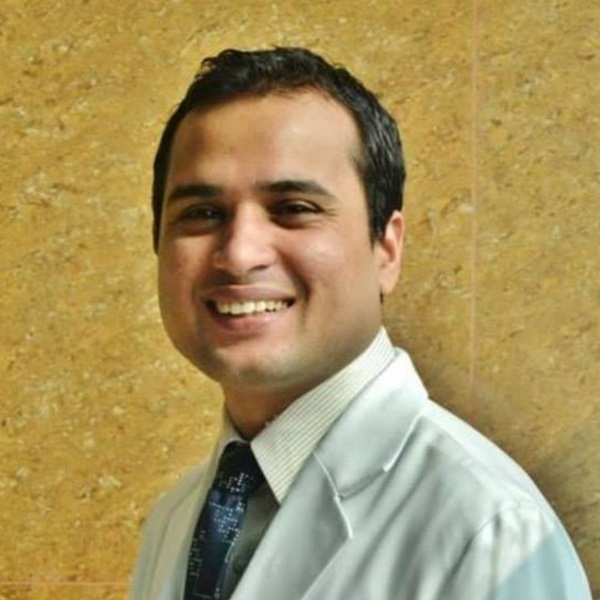
Expert reviewer
Dr. Bishworaj BastakotiConsultant Radiologist
Consultant Radiologist at KDRC, Pokhara. Residency at the National Kidney and Transplant Institute, Manila; previously at Western Regional Hospital. Member, Nepal Radiologist Society.
View doctor's profile →