CT Scan7 min read
Types of CT Scan Explained: Plain, Contrast and CT Angiography
The main types of CT scan are plain CT, which uses no dye and suits bones, injuries and kidney stones; contrast-enhanced CT, where iodine dye highlights organs and vessels; and CT angiography, a timed contrast scan that maps blood vessels. Scans are also grouped by region: head, chest, abdomen, spine and joints.
Also called: CAT scan Pokhara, CT scan near Lakeside Pokhara, 192-slice CT Nepal, contrast CT Pokhara, CT scan centre Pokhara
Booking, timings and preparation: see our 192 Slice High Resolution CT Scan page.
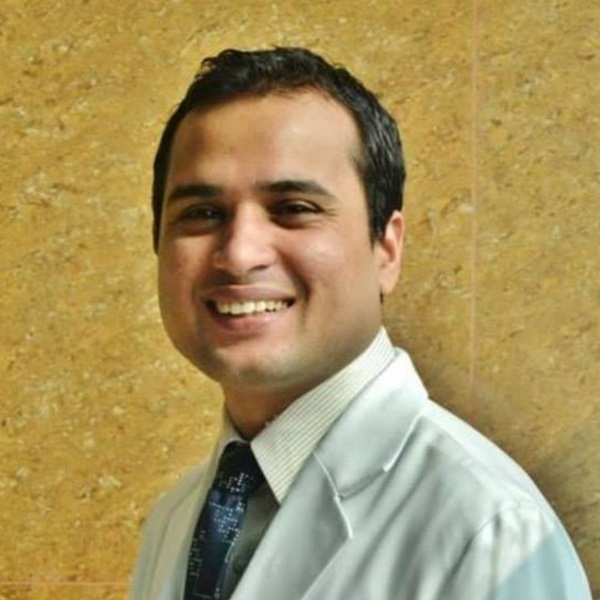 By Dr. Bishworaj Bastakoti · Consultant RadiologistReviewed by Dr. Nawaraj Paudel· Last reviewed 12 October 2026· Published 16 November 2026
Key takeaways
- KDRC performs CT scans in Pokhara on a 192-slice Siemens scanner, one of very few in Nepal.
- The main types are plain CT, contrast-enhanced CT and CT angiography.
- A plain CT needs no preparation; a contrast CT needs 4 to 6 hours of fasting.
- The scan takes 5 to 10 minutes and reports are usually ready the same day.
- Cost depends on the body part and contrast; KDRC quotes before booking on 061-553538.
What are the main types of CT scan?
The main types of CT scan are plain CT, contrast-enhanced CT and CT angiography, aimed at a region such as the head, chest or abdomen. Each is a fast, painless X-ray scan that builds detailed cross-sectional pictures of the body, and at KDRC it is done on a 192-slice Siemens scanner with reports by consultant radiologists. The scan itself usually takes 5 to 10 minutes, and most patients spend around 30 minutes at the centre including preparation.
CT stands for computed tomography. The scanner takes X-ray images from many angles as it rotates around you, and a computer turns them into thin slices. Unlike a plain X-ray, which gives one flat picture, a CT shows bones, organs, blood vessels and soft tissue slice by slice. Radiologists can scroll through these slices, build 3D views and spot problems invisible on standard X-rays, from a small brain bleed to a tiny lung nodule or a complex fracture.
RadiologyInfo.org describes CT as one of the quickest and most widely used imaging tests, especially in emergencies. KDRC's 192-slice Siemens scanner is one of very few in Nepal, producing sharp images quickly at a low radiation dose. Patients from across the Gandaki region can have the scan and report in one centre at Shantipath, Amarsingh Chowk; our CT scan in Pokhara page covers timings and booking.
- Contrast CT that maps blood vessels
- Radiation-free first test for many abdominal questions
- What decides the cost of each study
- No radiation; finer soft-tissue detail
- Screening before an iodine dye injection
What types of CT scan are available, and when are they ordered?
The right type depends on the clinical question your doctor needs answered. Doctors order CT for severe headache after injury, suspected stroke, unexplained chest or abdominal pain, fractures, cancer detection and follow-up, blood clots, and planning before some surgeries or biopsies.
- Plain CT. No dye is used. It suits bones, acute injuries, kidney stones and many first assessments, and needs no preparation.
- Contrast-enhanced CT. An iodine-based dye injected into a vein highlights organs and blood vessels, helping with infection, tumours and inflammation.
- CT angiography. A timed contrast scan that maps blood vessels of the brain, neck, lungs and limbs in fine detail; see CT angiography explained.
- Head CT. For stroke, injury and headache with warning signs; our article on CT scans for headache and head injury lists the red flags.
- Chest and abdominal CT. For lung infections, clots, lung disease, and liver, kidney, pancreas and bowel problems.
- Spine and joint CT. For fractures, disc disease and surgical planning, often with 3D reconstructions.
Not every symptom needs a CT. Doctors weigh the question against radiation exposure, which is why a headache without warning features rarely needs imaging, while a sudden severe headache or headache after a fall does.
How to prepare for a CT scan, and what affects cost
Preparation is genuinely simple, which surprises most patients. What you need to do depends mainly on whether contrast dye will be used.
Plain versus contrast preparation
For a plain CT, no preparation is needed. For a contrast CT at KDRC, fast for 4 to 6 hours beforehand; water is fine and you take your regular medicines unless told otherwise. Leave metal jewellery at home, wear clothing without zips or buckles over the scan area, and bring previous reports or films.
| Scan type | Preparation | Often used for |
|---|---|---|
| Plain CT | None; eat and take medicines as usual | Bones, injuries, stones, first assessment |
| Contrast-enhanced CT | Fast 4 to 6 hours; water is fine | Organs, infection, tumours, inflammation |
| CT angiography | Fasting and contrast screening | Blood vessels of brain, neck, lungs, limbs |
What to tell the staff
Tell the team about allergies, especially any previous reaction to contrast dye, kidney problems, diabetes, or any chance of pregnancy, because these shape how contrast is used. Our step-by-step CT scan preparation guide has the full checklist, and what to bring to your imaging appointment covers documents.
How the cost is worked out
CT scan cost depends on the body part scanned and whether contrast dye is used. KDRC quotes before you book, with no hidden charges; call 061-553538 for current prices. When comparing centres, compare what is included: scanner generation, whether a radiologist report is included and whether films or digital copies are provided. Our detailed breakdown is in what affects CT scan cost.
- 1Call to bookRing 061-553538 with your prescription to confirm the scan type, preparation and current price.
- 2Check if contrast is plannedFor a contrast CT, fast for 4 to 6 hours; water is fine. A plain CT needs no fasting.
- 3Keep taking your medicinesTake regular medicines unless your doctor or the CT team tells you otherwise.
- 4Dress simplyWear clothing without zips or buckles over the scan area and leave metal jewellery at home.
- 5Bring your paperworkBring the referral, previous reports or films, and a list of your medicines.
- 6Tell staff your historyMention allergies, kidney problems, diabetes or possible pregnancy before the scan.
CT or MRI: which one do you need?
CT is faster and excels at bone, acute bleeding, the chest and the abdomen. MRI uses a magnet and radio waves, with no ionising radiation, and shows finer detail in brain tissue, joints, nerves and soft tissue. Speed and bone favour CT; tissue detail favours MRI.
Patients sometimes ask for "the better machine", but the two are complementary rather than competing. In an emergency, CT can rule out dangerous problems in minutes, and MRI can follow later for detail. Your doctor chooses based on the question, not on which scanner is newer.
| Factor | CT scan | MRI |
|---|---|---|
| How it works | X-rays and a computer | Strong magnet and radio waves |
| Scan time | Usually 5 to 10 minutes | Usually longer |
| Best for | Bone, bleeding, chest, abdomen | Brain tissue, nerves, joints, soft tissue |
| Radiation | Small, controlled dose | No ionising radiation |
| Emergency use | First choice for speed | Usually follows for detail |
Our comparison with a decision table is at CT scan vs MRI, and KDRC's open MRI service page covers that scanner.
What happens during a CT scan at KDRC?
You lie on a table that slides gently through the scanner's open ring while it takes images. Nothing encloses you, since the ring is open on both sides, and the technologist can see and hear you throughout. You may be asked to hold your breath for a few seconds at a time so the images stay sharp.
If contrast dye is used, a small cannula is placed in your arm and you may feel a brief warm flush or metallic taste; both are normal and pass in seconds. The scan itself usually takes 5 to 10 minutes, and you can go home or back to work straight afterwards. Images are read by consultant radiologists, and the report goes to your doctor, usually the same day.
The 192-slice scanner captures many thin slices per rotation, so examinations finish faster with sharper images than older 16- or 64-slice machines. For patients that means shorter breath-holds, fewer motion-blurred repeats and better small-vessel imaging; read what a 192-slice CT scanner means for patients.
- Have had a reaction to contrast dye before
- Have other allergies or asthma
- Have kidney disease
- Have diabetes and take regular medicines
- Are or might be pregnant
- Are breastfeeding and contrast is planned
- Have had previous CT or MRI scans elsewhere
- Feel anxious or find it hard to lie still
Is a CT scan safe?
Yes. Modern CT uses the lowest radiation dose needed for a diagnostic image, and the NHS notes that the benefit of an accurate diagnosis usually far outweighs the small radiation risk. KDRC's 192-slice scanner uses AI-assisted low-dose protocols to keep exposure low.
Doses vary by body part. According to RadiologyInfo.org, a CT of the brain is about 1.6 mSv, a chest CT about 6.1 mSv and an abdomen and pelvis CT about 7.7 mSv, compared with around 3 mSv a year from natural background radiation.
Two cautions matter in practice. Pregnancy should always be declared, since imaging choices change. Contrast dye, while safe for most people, needs care with severe allergies and significant kidney disease, which is exactly why the screening questions exist. For the dye itself, see CT contrast dye safety and RadiologyInfo.org on contrast materials.
Common mistakes and myths about CT scans
- Myth: CT scans are painful. The scan is painless; contrast may cause only a brief warm feeling.
- Mistake: fasting for a plain CT. Fasting is needed only for contrast studies, so do not skip meals or medicines unnecessarily.
- Mistake: stopping regular medicines. Keep taking them unless your doctor or the CT team tells you otherwise.
- Myth: one CT scan is dangerous. A single justified scan carries a very small risk compared with the value of a clear diagnosis.
- Mistake: comparing prices only. Check whether the report, contrast and copies are included, and which scanner is used.
- Mistake: leaving old reports at home. Previous scans let the radiologist compare and spot change.
KDRC combines the 192-slice CT with on-site consultant radiologists, open MRI, HD ultrasound and endoscopy under one roof, with 24/7 ambulance support if transport is a problem. Book by calling 061-553538 or 9856077433, or read about 192-slice CT scanning at KDRC.
Example
Illustrative example (fictional). Bimala, a 52-year-old teacher from Bagar, had a cough that would not settle and a shadow on her chest X-ray. Her doctor wrote "CT chest with contrast" on the prescription. She had never had a scan and worried about the machine, the dye and the cost.
Her son Ramesh called 061-553538. The team explained the scan type, quoted the current price before booking, and told her to fast for 4 to 6 hours but keep drinking water and taking her blood pressure tablets. They asked whether she had kidney problems or any past reaction to dye, and reminded her to bring the X-ray and earlier reports.
On the day, Bimala felt a brief warm flush when the dye went in, held her breath a few times, and was off the table within minutes. The ring was open, so she never felt closed in. A consultant radiologist's report reached her doctor the same day, and she went home straight after the scan.
Frequently asked questions
Where can I get a CT scan in Pokhara?
KDRC at Shantipath, Amarsingh Chowk, Pokhara-10 performs CT scans on a 192-slice Siemens scanner with consultant radiologist reports. Call 061-553538 or 9856077433 to book.
How much does a CT scan cost in Pokhara?
Cost depends on the body part and whether contrast dye is used. KDRC quotes before you book with no hidden charges; call 061-553538 for current prices.
How long does a CT scan take?
The scan itself usually takes 5 to 10 minutes, with about 30 minutes at the centre including preparation. Reports at KDRC are usually ready the same day.
Do I need to fast before a CT scan?
A plain CT needs no fasting. A contrast CT usually requires 4 to 6 hours without food; water is fine and you take your regular medicines unless told otherwise.
Is a CT scan painful?
No. You lie still while the scanner rotates around you. Contrast dye may cause a brief warm feeling or metallic taste that passes within seconds.
Is CT scan radiation dangerous?
The dose is small and modern scanners keep it low; KDRC uses AI-assisted low-dose protocols. One justified scan carries a very small risk compared with the benefit of an accurate diagnosis.
Related tests at KDRC Pokhara
- 192 Slice High Resolution CT ScanA CT scan in Pokhara at KDRC is a fast, painless X-ray test that uses a computer to create detailed cross-sectional images of the head, chest, abdomen, spine, bones and blood vessels.
- Open Type MRIAn MRI in Pokhara at KDRC is a scan that uses a strong magnet and radio waves, not X-rays, to picture the brain, spine, joints and organs in detail.
Questions or bookings: call +977-61553538 or +977-9856077433.
Go deeper
- 192-slice CT scan at KDRC
- CT scan price in Pokhara
- How to prepare for a CT scan
- Contrast dye for CT scans: safety
- What a 192-slice CT scanner means for patients
- What Does a CT Scan of the Abdomen Show? Contrast and PreparationAn abdominal CT scan shows the organs, bowel, blood vessels and lymph nodes in detail. Learn what it can detect, the difference between plain and contrast scans, and how to prepare.
- Chest CT Scan for Cough: When Doctors Order It and What It ShowsMost coughs need no scan. Learn when a persistent cough calls for a chest CT or HRCT instead of an X-ray, and what the scan can show.
- CT Scan for Headache and Head Injury: When Doctors Order ItMost headaches need no scan. A CT scan for headache is ordered for red flags such as sudden severe pain, neurological signs or a head injury.
Sources
- www.radiologyinfo.org/en/info/bodyct
- www.nhs.uk/tests-and-treatments/ct-scan/
- www.radiologyinfo.org/en/info/safety-xray
- www.radiologyinfo.org/en/info/safety-contrast
This article is general information, not medical advice. Always consult your doctor about your specific situation.
About the author
Dr. Bishworaj BastakotiConsultant Radiologist
Consultant Radiologist at KDRC, Pokhara. Residency at the National Kidney and Transplant Institute, Manila; previously at Western Regional Hospital. Member, Nepal Radiologist Society.
View doctor's profile →
Expert reviewer
Dr. Nawaraj PaudelConsultant Radiologist
Consultant Radiologist at KDRC, Pokhara. Residency at East Avenue Medical Centre, Manila; formerly Assistant Professor of Radiology at Universal College of Medical Sciences. Member, Nepal Radiologist Society.
View doctor's profile →